Understanding a text deeply requires more than reading—it demands reflection, questioning, and critical analysis. Journey to the End of the Earth by Tishani Doshi is a rich, thought-provoking chapter that explores Antarctica’s unique environment while raising urgent concerns about climate change, evolution, and the fragile balance of life on our planet. To help learners grasp the chapter’s scientific insights, environmental themes, and literary depth, this article presents a comprehensive set of thoughtfully crafted questions and answers.
These include short and long responses, HOTS questions, value-based interpretations, and extract-based analysis, all designed to enhance conceptual clarity and strengthen exam readiness. Through these questions, students will not only understand the text better but also develop a deeper awareness of the environmental issues it highlights.
I. Short Answer Questions (SAQ — 30–40 words each)
1. Why does the author describe Antarctica as “a giant ping-pong ball”?
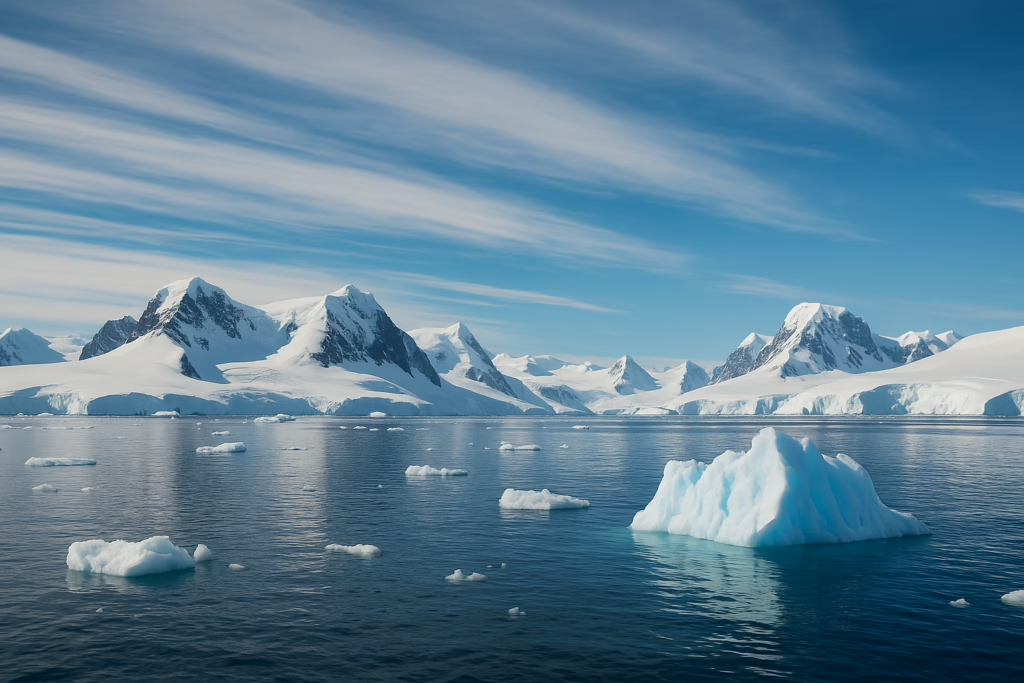
Antarctica appears featureless, white, and vast, without trees, buildings, or human markers. Its endless landscape of snow and ice gives the impression of a smooth, spherical, surreal world, like a giant ping-pong ball.
2. What made the author feel profound wonder upon first seeing Antarctica?
The massive white expanse, the uninterrupted blue horizon, and the realisation that this remote continent was once connected to India as part of Gondwana filled the author with awe.
3. Why is it important to study the ice-cores of Antarctica?
Antarctic ice-cores store carbon records that are nearly 500,000 years old. They help scientists understand past climates and predict future climate patterns, offering insight into global warming and atmospheric changes.
4. How does the author describe the silence of Antarctica?
The silence is described as “ubiquitous,” broken only by the cracking of ice sheets or an occasional avalanche. This deep quietness intensifies the feeling of isolation and ancient stillness.
5. Why does Geoff Green believe that students should visit Antarctica?
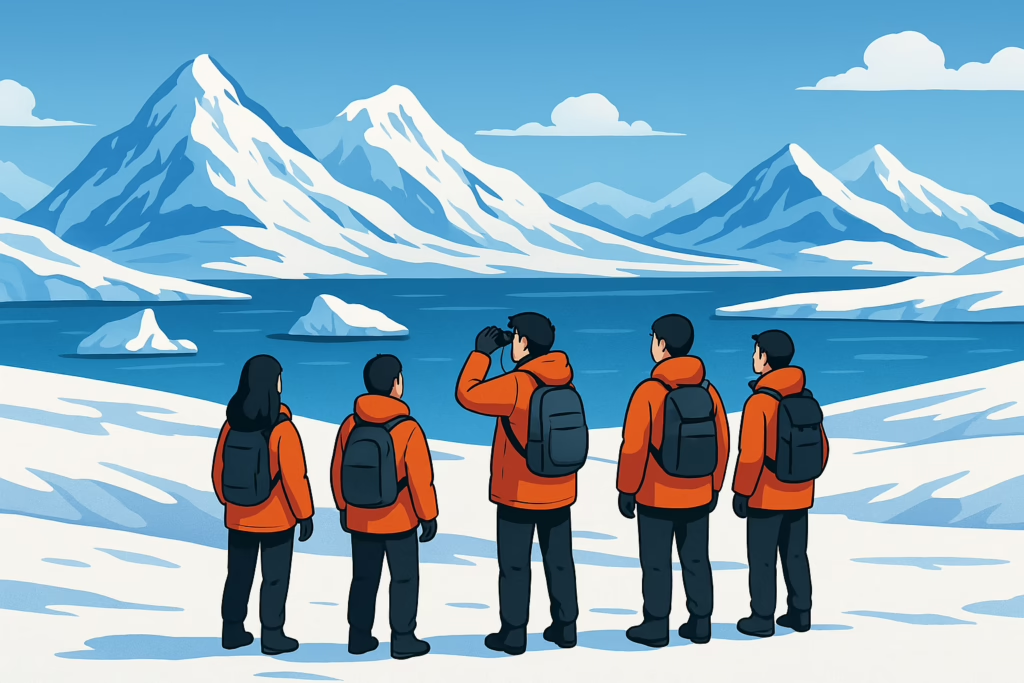
He believes teenagers are at an age where they can learn, absorb, and act. A firsthand experience of the continent builds environmental sensitivity and shapes responsible future policymakers.
II. Long Answer Questions (LAQ — 120–150 words)
6. Describe how Antarctica helps us understand the impact of climate change.
Antarctica acts as a natural archive of Earth’s climatic and geological history. With 90% of the world’s ice, even small rises in temperature cause noticeable changes, such as melting glaciers and collapsing ice shelves. The continent’s simple food chain, especially phytoplankton, shows how delicate the ecological balance is.
Ice-cores reveal historical carbon levels, enabling scientists to trace how human activities—especially burning fossil fuels—have altered the atmosphere. When students see glaciers retreating with their own eyes, the abstract concept of global warming becomes a powerful reality. Thus, Antarctica helps us understand the urgency of climate change and the consequences of human interference.
7. How does the author’s Antarctic journey become a lesson in interconnectedness?
The journey reveals that everything on Earth—air, water, temperature, carbon cycles, and living organisms—is deeply interlinked. Walking on a metre-thick ice sheet with 180 metres of ocean beneath makes the author realise how thin the line is between stability and disaster.
The behaviour of phytoplankton, tiny organisms that support entire marine food chains, shows how even microscopic changes can influence global systems. The pristine silence and raw landscape further emphasise how human actions elsewhere affect even the most remote regions. Antarctica becomes a living example of Earth’s balance, teaching that harming small elements can disrupt the whole planet.
III. HOTS (Higher Order Thinking Skills)
8. What does the author mean by saying “the prognosis isn’t good” for humankind?
She means that if current patterns of environmental destruction continue—rising carbon emissions, melting ice, disrupted ecosystems—humanity may face severe and irreversible consequences. Our survival itself may be threatened.
9. Why is the author’s experience of walking on the ocean described as an epiphany?
Because it brings an intense realization that beneath a thin sheet of ice lies a vast, living ocean. This moment reveals the fragility of Earth’s systems and the interconnectedness of life.
10. How does the continent help us “place ourselves in the context of the Earth’s geological history”?
Antarctica reveals millions of years of untouched geological evidence—continental drift, ancient climates, and carbon records. Standing there makes humans realise how briefly they have existed compared to Earth’s vast timeline.
IV. Value-Based Questions
11. What values does the Students on Ice programme aim to instill in young people?
It fosters environmental responsibility, global citizenship, scientific curiosity, humility before nature, and a sense of duty toward protecting fragile ecosystems.
12. What does the author’s journey teach us about responsible human behaviour?
It teaches that we must respect nature’s limits, reduce carbon emissions, act against climate change, and appreciate how even small actions affect global systems.
V. Extract-Based Questions
Extract 1:
“You lose all earthly sense of perspective and time here.”
Q1. Why does the author feel this loss of perspective?
Because Antarctica has no familiar human markers like trees or buildings, making it impossible to judge distance, depth, or direction.
Q2. What effect does this have on the traveller?
It creates a dreamlike, surreal atmosphere that heightens the sense of isolation.
Extract 2:
“Take care of the small things and the big things will fall into place.”
Q1. What “small things” does the author refer to here?
Phytoplankton—microscopic organisms essential to the marine food chain and global carbon cycle.
Q2. How does this relate to environmental conservation?
It means protecting even the smallest elements of an ecosystem is necessary to preserve the larger natural balance.
VI. Additional Conceptual Questions
13. Why does Antarctica remain relatively pristine compared to other continents?
Because it has never supported a permanent human population and therefore has very little human interference.
14. How does the breakup of Gondwana relate to the present geography of the world?
Gondwana’s breakup created the modern continents. India moved northwards to collide with Asia and form the Himalayas; South America drifted to join North America, opening the Drake Passage.
15. What does the author mean when she asks, “Will we be around to see it?”
She wonders whether humans will survive long enough to witness Antarctica becoming warm again, as it once was millions of years ago.
Journey to the End of the Earth is far more than a travel narrative—it is a powerful reminder of our planet’s delicate equilibrium and the responsibility each generation bears in safeguarding it. Through the questions and answers presented in this article, students explore not only the factual and scientific dimensions of Antarctica but also the deeper philosophical and environmental messages embedded in Tishani Doshi’s writing. By engaging with these analytical, value-based, and higher-order questions, learners strengthen their comprehension, sharpen their critical thinking skills, and develop a more informed approach to global ecological challenges. Ultimately, this reflective exploration encourages readers to appreciate the interconnectedness of life on Earth and inspires a commitment to protecting our shared future.