Summary: A Letter to God
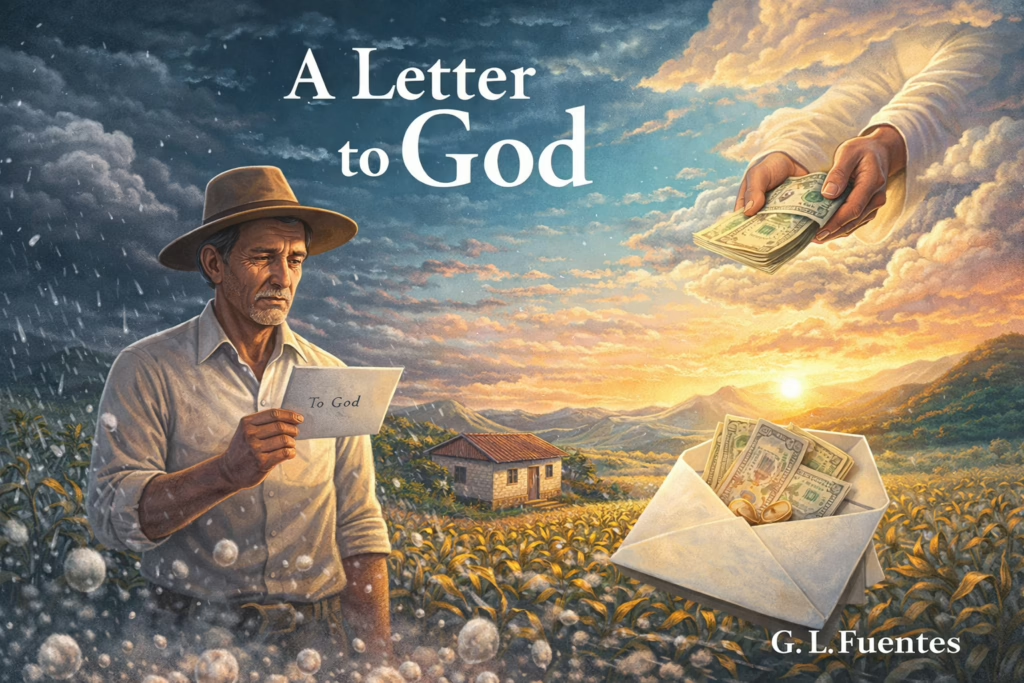
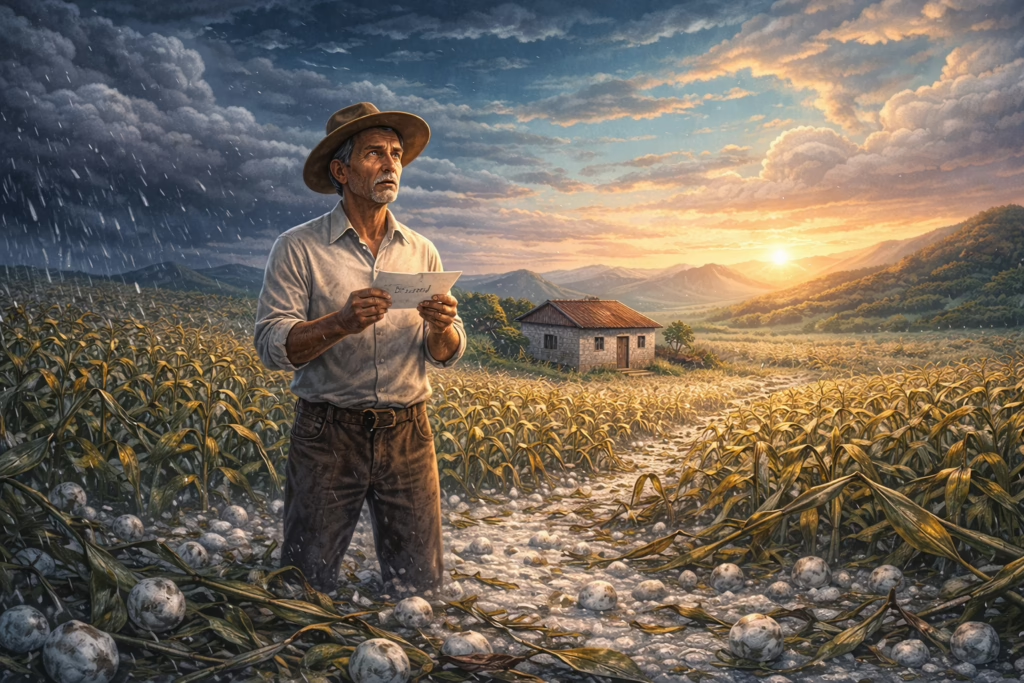
A Letter to God is a story about faith, innocence, and human irony. Lencho is a poor farmer who lives with his family in a lonely valley. He eagerly waits for rain to nourish his cornfields. When rain finally comes, it soon turns into a destructive hailstorm that completely ruins his crops. Faced with starvation, Lencho feels helpless but does not lose hope.
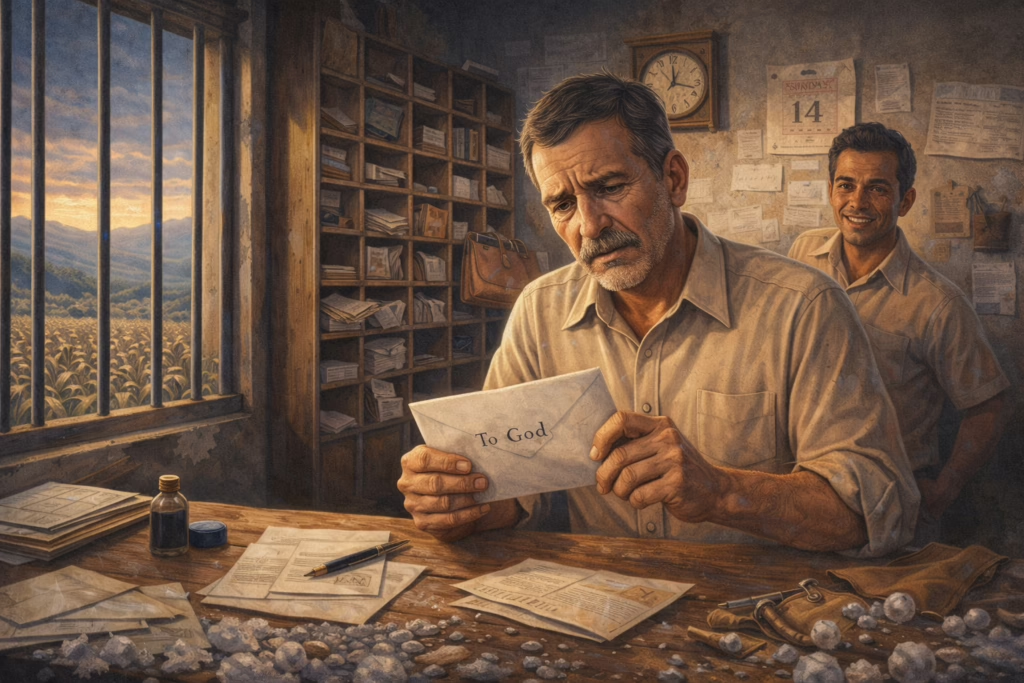
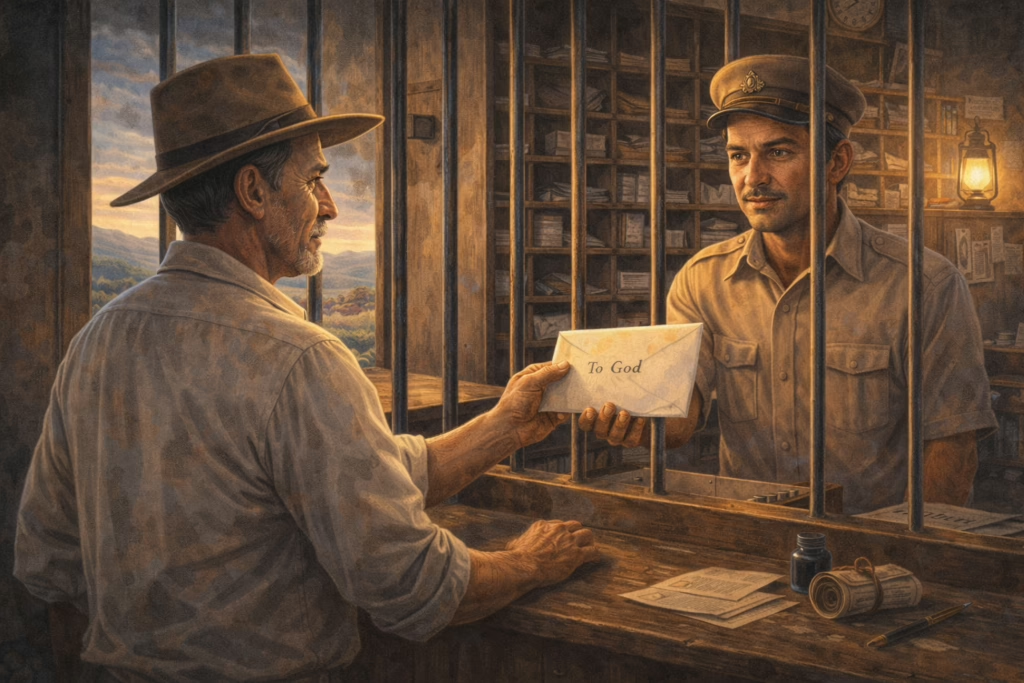
Having complete faith in God, Lencho writes a letter asking God for one hundred pesos to sow his fields again and support his family. The letter reaches the post office, where the postman and postmaster are amused by Lencho’s innocence. However, the postmaster is deeply moved by his faith and decides to help him. He collects money from his employees and friends and sends it to Lencho, signing the letter as “God.”
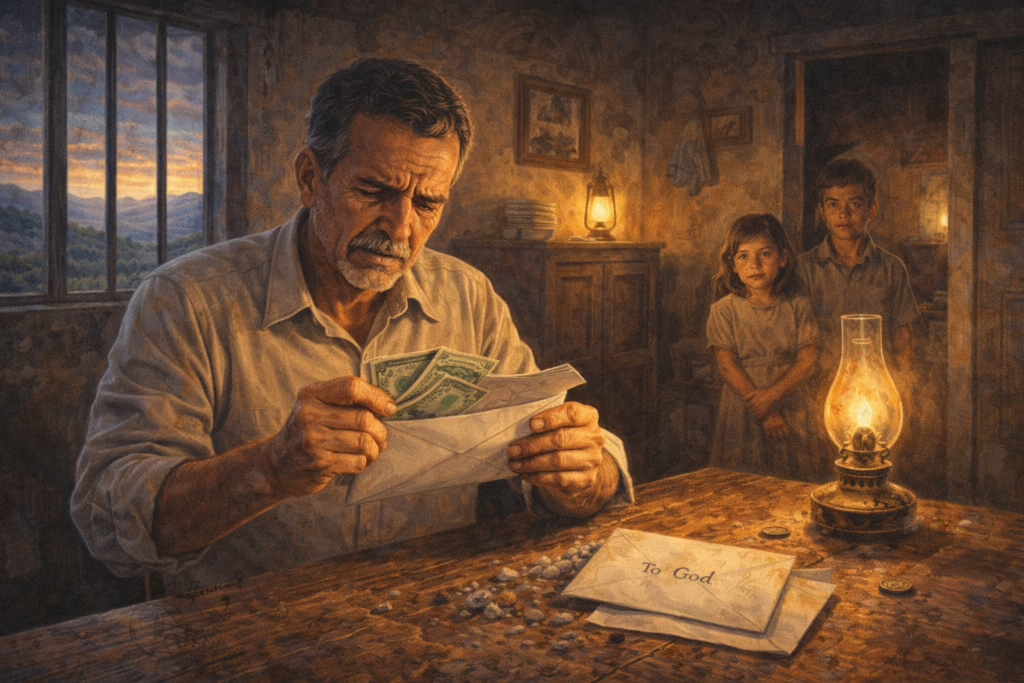
When Lencho receives the money, he is not surprised, but he becomes angry because the amount is less than what he had asked for. Firmly believing that God cannot make mistakes, Lencho concludes that the post office employees must have stolen the rest. He writes another letter to God requesting the remaining money and warns Him not to send it through the post office again.
The story highlights unquestioning faith, kindness, and irony, showing how human goodness often goes unrecognized and misunderstood.
About the Author
G. L. Fuentes was a Mexican writer known for his short stories that explore human faith, simplicity, irony, and social realities. His works often focus on ordinary people placed in difficult situations, highlighting their inner strength and beliefs.
In A Letter to God, Fuentes presents the theme of unquestioning faith and human kindness, using gentle humour and irony to show how innocence can misunderstand generosity. His writing style is simple, direct, and deeply symbolic, making his stories accessible while carrying strong moral messages.
Below is a detailed, exam-oriented literary analysis of the prose lesson A Letter to God, strictly focused on the story (no poems), suitable for Class X CBSE answers, articles, or notes.
Detailed Analysis of A Letter to God
A Letter to God is a simple yet profound story that explores faith, human kindness, innocence, and irony through the life of a poor farmer named Lencho. Though the language and plot are straightforward, the story carries deep symbolic and moral significance.
1. Plot and Structure
The story follows a linear narrative structure:
- Exposition – Lencho, a poor farmer, waits eagerly for rain to nourish his cornfields.
- Rising Action – Rain comes but turns into a destructive hailstorm that ruins the crops.
- Crisis – Facing starvation, Lencho writes a letter to God asking for money.
- Climax – The postmaster, moved by Lencho’s faith, arranges money and sends it to him.
- Resolution with Irony – Lencho receives less money than expected and blames the post office employees, unknowingly accusing his benefactors.
This structure reinforces the central irony of the story.
2. Character Analysis
Lencho
Lencho is portrayed as:
- Hardworking – He works tirelessly on his fields.
- Deeply religious – His faith in God is absolute and unquestioning.
- Innocent and naïve – He cannot imagine human kindness without divine intervention.
- Ironically ungrateful – He misjudges the post office employees.
Lencho represents pure faith without reasoning, showing both the strength and limitation of blind belief.
The Postmaster
The postmaster symbolizes:
- Human compassion
- Empathy and generosity
- Moral responsibility
He is the true moral center of the story, acting selflessly to preserve Lencho’s faith.
3. Themes
a) Faith
Faith is the backbone of the story. Lencho’s belief in God is so strong that he writes to Him directly. However, the story subtly questions blind faith that ignores human agency.
b) Human Kindness
The postmaster and his colleagues embody human goodness. Ironically, this kindness goes unrecognized and unappreciated.
c) Irony
Irony is the most striking element:
- Lencho receives help from humans but thanks God.
- He accuses the very people who helped him.
This situational irony gives the story its emotional and moral depth.
d) Man vs Nature
Nature is unpredictable and destructive. The hailstorm shows how helpless humans are before natural forces.
4. Use of Language and Style
- The language is simple, direct, and realistic, suitable for portraying rural life.
- Dialogues are short and natural, reflecting Lencho’s simplicity.
- Metaphors like “raindrops are new coins” and “an ox of a man” enhance imagery.
- Negatives are used for emphasis, intensifying emotional impact.
5. Symbols and Imagery
- Rain – Hope and prosperity
- Hailstorm – Destruction and despair
- Letter to God – Absolute faith
- Money – Survival, trust, and misunderstanding
These symbols elevate the story beyond a simple rural tale.
6. Conflict
- External conflict: Man vs Nature (hailstorm destroying crops)
- Internal/moral conflict: Faith vs Reason, Gratitude vs Suspicion
The moral conflict is subtle but powerful.
7. Message and Moral
The story conveys that:
- Faith is powerful, but blind faith can lead to misunderstanding.
- Human kindness often works quietly and goes unnoticed.
- True faith should include gratitude and trust in humanity.
The story does not ridicule faith but gently critiques faith without awareness.
8. Relevance and Universality
Despite being set in a rural backdrop, the story remains relevant:
- Natural disasters still affect farmers.
- Blind belief and misplaced suspicion exist in modern society.
- Human goodness often remains unacknowledged.
Conclusion
A Letter to God is a deceptively simple story with deep moral resonance. Through irony, symbolism, and gentle humour, G. L. Fuentes presents a thoughtful commentary on faith, human compassion, and misunderstanding. The story encourages readers to value both faith and human kindness, reminding us that miracles often come through people, not from heaven alone.