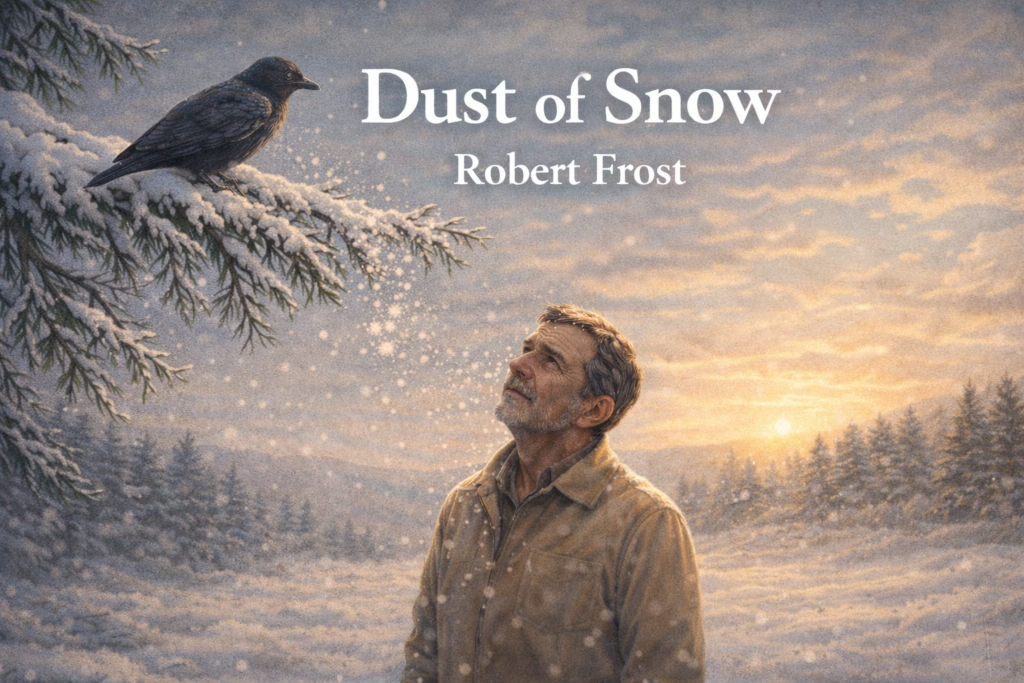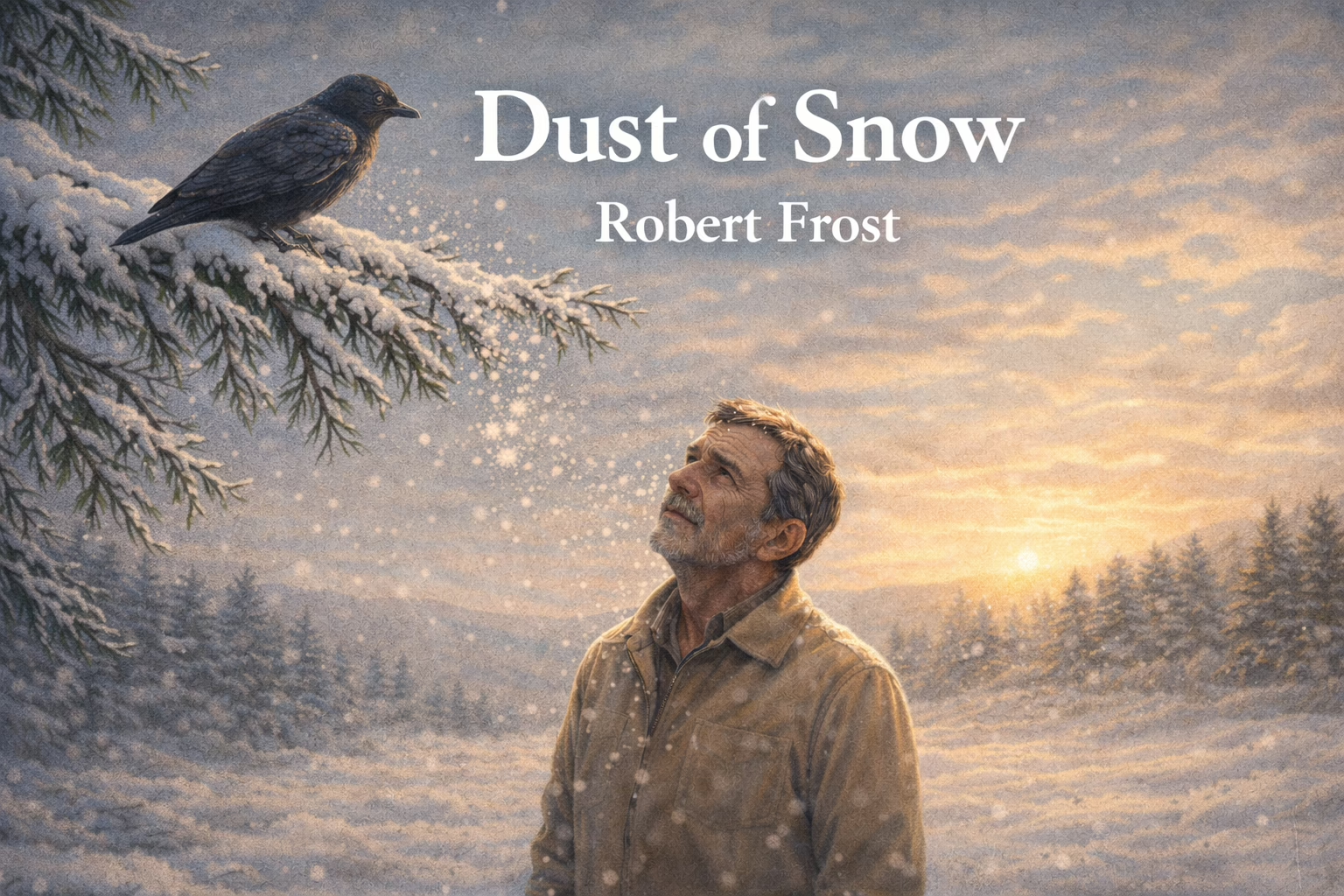
The poem Dust of Snow from the CBSE Class X textbook First Flight is a short yet deeply meaningful work by Robert Frost that highlights how small, seemingly insignificant moments can bring about a positive change in one’s mood and outlook on life. Through simple imagery drawn from nature, the poet conveys a powerful message of hope, renewal, and emotional healing. This article presents a carefully structured set of questions and answers based strictly on the prescribed text, designed to help students understand the poem’s themes, symbolism, and poetic devices. The answers follow the CBSE examination pattern and aim to support effective revision, clearer interpretation, and confident exam preparation.

Poem: Dust of Snow – Robert Frost
Question 1
What is a “dust of snow”? What does the poet say has changed his mood? How has the poet’s mood changed?
A “dust of snow” refers to fine particles of snow that fall from a tree. The poet’s mood changes when a crow shakes this dust of snow from a hemlock tree onto him. This small, unexpected incident lifts the poet’s spirits and changes his mood from sadness and regret to cheerfulness and hopefulness.
Question 2
How does Frost present nature in this poem?
Robert Frost presents nature as a healing and transformative force that can bring positive change even through small, seemingly insignificant incidents.
(i) What are the birds that are usually named in poems? Is a crow often mentioned? What images come to mind when you think of a crow?
Poems usually mention birds like nightingales, sparrows, doves, or swans. A crow is not commonly mentioned because it is often associated with bad luck, darkness, and sorrow.
(ii) What is a hemlock tree? Why does the poet not choose a ‘beautiful’ tree?
A hemlock tree is a poisonous tree. The poet chooses a hemlock instead of a beautiful tree to show that positive moments can come even from gloomy or unpleasant surroundings.
(iii) What do the ‘crow’ and ‘hemlock’ represent—joy or sorrow? What does the dust of snow stand for?
The crow and the hemlock tree represent sorrow, negativity, and depression. The dust of snow symbolizes a sudden moment of joy, hope, and emotional renewal that changes the poet’s outlook.

Question 3
Have there been times when you felt depressed or hopeless? Have you experienced a similar moment that changed your mood that day?
Yes, there have been times when I felt depressed or hopeless. A small, unexpected moment such as a kind word from someone or a pleasant natural scene has often helped change my mood and made the day better, just like the poet’s experience in the poem.
In conclusion, Dust of Snow beautifully illustrates how a small and unexpected experience can bring about a significant emotional transformation. Through the simple images of a crow, a hemlock tree, and falling snow, Robert Frost conveys a universal message of hope, positivity, and renewal. The questions and answers discussed in this article help students grasp the deeper meaning of the poem, appreciate its symbolism, and understand how nature influences human emotions. Overall, this article serves as a useful study aid for effective revision and exam preparation, enabling learners to approach poetry with greater confidence and insight.