Summary of Nelson Mandela: Long Walk to Freedom
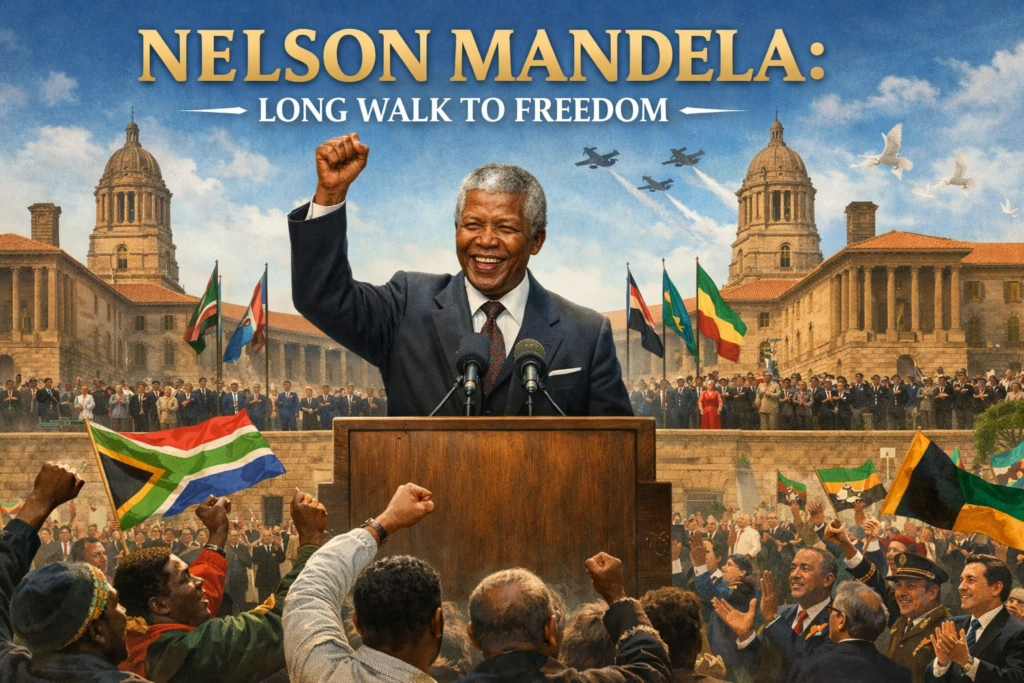
In this autobiographical extract, Nelson Mandela describes the historic day of 10 May 1994, when he was sworn in as the first Black President of South Africa. The inauguration took place at the Union Buildings in Pretoria, once a symbol of white supremacy, but now a place celebrating democracy and unity. Leaders from all over the world attended the ceremony, showing international support for the end of apartheid.
In his speech, Mandela recalls the long and painful history of racial oppression under apartheid, which caused immense suffering to the people of South Africa. He calls apartheid an “extraordinary human disaster” but celebrates the birth of a new nation based on equality, justice, and human dignity. He thanks the countless freedom fighters whose sacrifices made this victory possible.
Mandela reflects on the changing attitudes of the military and police, who once oppressed him but now saluted him, showing their loyalty to democracy. The singing of two national anthems symbolises reconciliation between blacks and whites.
He explains that true courage is not the absence of fear but the triumph over it, and that love is more natural to humans than hate. Mandela also shares how his idea of freedom evolved—from personal freedom in youth to the collective freedom of his people. He concludes by stating that freedom is indivisible, and that both the oppressed and the oppressor must be liberated for true humanity to exist.
Analysis of Nelson Mandela: Long Walk to Freedom
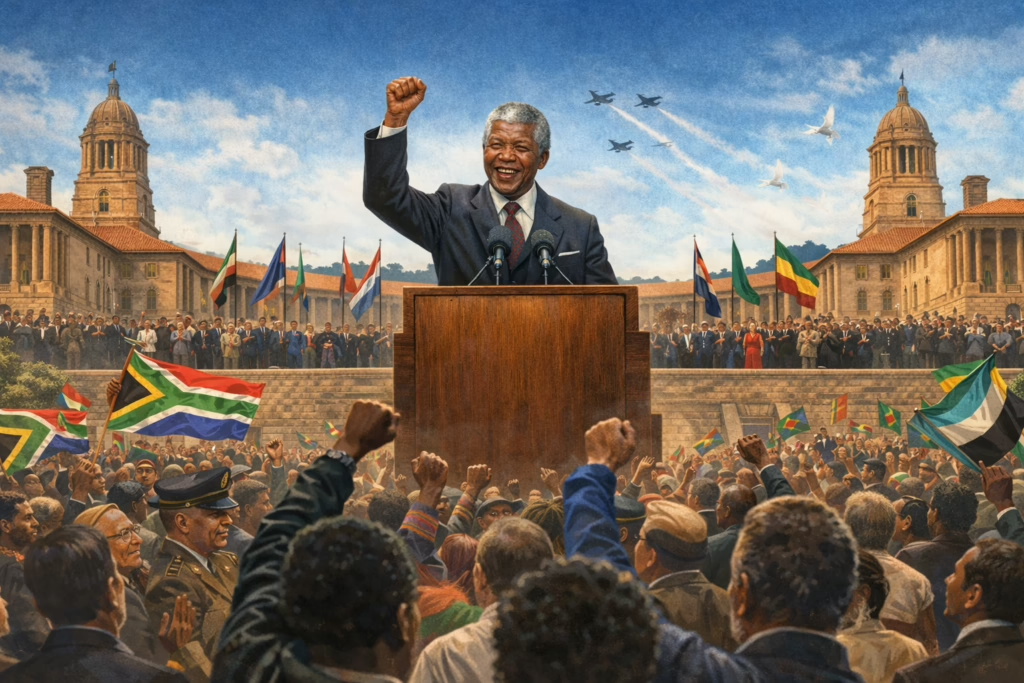
The chapter Nelson Mandela: Long Walk to Freedom is an extract from the autobiography of Nelson Mandela, describing the historic inauguration ceremony held on 10 May 1994, when he became the first Black President of South Africa. The text goes beyond a political event and offers deep reflections on freedom, courage, sacrifice, and humanity.
1. Historical and Political Context
The text is set against the backdrop of apartheid, a cruel system of racial discrimination that existed in South Africa for decades. Under apartheid, non-white citizens were denied basic rights and dignity. Mandela refers to this period as an “extraordinary human disaster”, highlighting the suffering and injustice endured by millions. The inauguration symbolises the end of apartheid and the birth of a democratic, non-racial nation.
2. Theme of Freedom
A central theme of the chapter is freedom. Mandela explains that freedom is not merely the absence of chains or political independence. True freedom means:
- Living with dignity
- Enjoying equal rights
- Being free from poverty, discrimination, and fear
He emphasises that freedom is indivisible—no one can be truly free if others are oppressed.
3. Idea of Courage
Mandela presents a powerful definition of courage. According to him:
“Courage is not the absence of fear, but the triumph over it.”
Through this idea, he shows that brave people feel fear but choose to overcome it for a greater cause. This message inspires students to understand courage as moral strength, not physical fearlessness.
4. Sacrifice and Struggle
Mandela repeatedly acknowledges the sacrifices of countless freedom fighters who suffered imprisonment, torture, and death. He humbly states that he is “the sum of all those African patriots” who came before him. This highlights the idea that great achievements are collective efforts, not individual victories.
5. Reconciliation and Unity
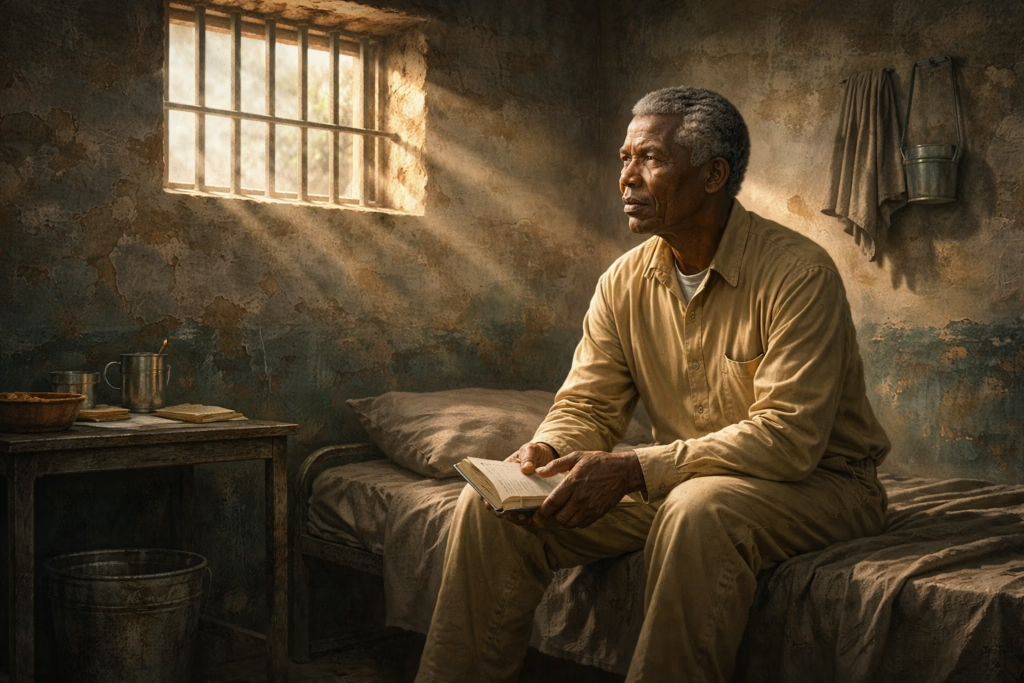
One of the most striking aspects of the text is its emphasis on forgiveness and reconciliation. The military generals who once arrested Mandela now salute him. The singing of two national anthems—one by blacks and one by whites—symbolises unity and healing. Mandela chooses reconciliation over revenge, showing great moral leadership.
6. Love vs Hate
Mandela strongly believes that love is natural to human beings, while hate is learned. Even during his imprisonment, he noticed “a glimmer of humanity” in his guards. This idea reinforces the belief that human goodness can never be fully destroyed, no matter how harsh the circumstances.
7. Style and Tone
- Tone: Reflective, hopeful, dignified
- Style: Simple yet powerful language, enriched with contrast (past vs present)
- Literary devices:
- Contrast (seat of white supremacy → rainbow gathering)
- Metaphor (chains, hunger for freedom)
- Repetition (never, never, and never again)
These devices make the message impactful and memorable.
8. Message and Values
The chapter teaches important values such as:
- Equality and human dignity
- Courage and perseverance
- Forgiveness and reconciliation
- Collective responsibility
It encourages readers to fight injustice without hatred and to work for a fair and humane society.
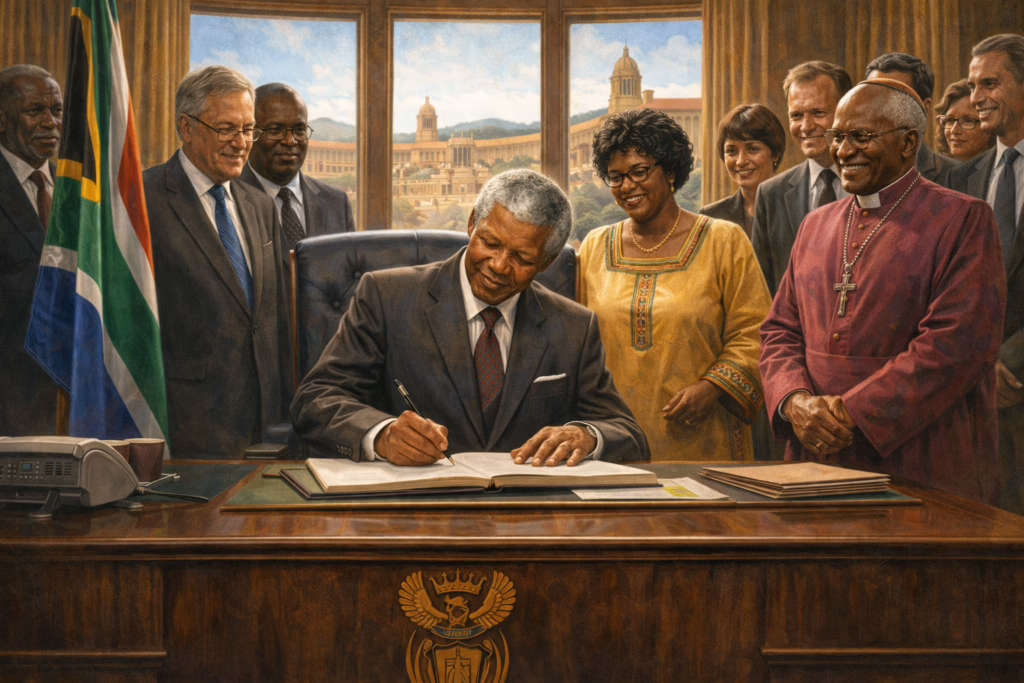
About the Author – Nelson Mandela
Nelson Mandela (1918–2013) was a great South African leader, freedom fighter, and statesman. His full name was Nelson Rolihlahla Mandela. He was born in the village of Mvezo, South Africa, and was trained as a lawyer.
Mandela was a leading member of the African National Congress (ANC) and devoted his life to fighting against the racist system of apartheid, which denied basic rights to non-white people in South Africa. Because of his struggle for equality and justice, he spent 27 years in prison, much of it on Robben Island.
After his release in 1990, Mandela played a key role in ending apartheid through peaceful negotiation. In 1994, he became South Africa’s first Black President in the country’s first democratic elections. He strongly believed in forgiveness, reconciliation, equality, and human dignity.
In 1993, Nelson Mandela was awarded the Nobel Peace Prize for his role in peacefully dismantling apartheid. His autobiography, Long Walk to Freedom, is an inspiring account of his lifelong struggle for freedom and justice.