
“The Black Aeroplane” by Frederick Forsyth is a gripping and mysterious story included in the CBSE Class X English textbook First Flight. The narrative follows a pilot who finds himself trapped in a violent storm with failing instruments and no fuel, highlighting the themes of danger, hope, courage, and the presence of unexplained forces in times of crisis. The story keeps readers engaged through its suspenseful atmosphere and an open-ended conclusion that encourages thoughtful interpretation.
This article presents well-structured answers to all the textual, language, and grammar-based questions related to the lesson, up to the writing section. The responses are carefully framed in simple, student-friendly language, strictly aligned with CBSE examination requirements. Together, these questions and answers aim to strengthen comprehension, improve language skills, and help students understand both the literal and deeper meanings of this thought-provoking story.
“The Black Aeroplane” – Thinking About the Text
1. “I’ll take the risk.” What is the risk? Why does the narrator take it?
The risk is flying straight into the storm clouds without enough fuel and visibility. The narrator knows that the storm is dangerous and that he does not have sufficient fuel to go around it or return to Paris.
He takes the risk because he is eager to reach home and confident about his flying skills. His desire to get back to England and enjoy breakfast with his family makes him ignore the danger.
2. Describe the narrator’s experience as he flew the aeroplane into the storm.
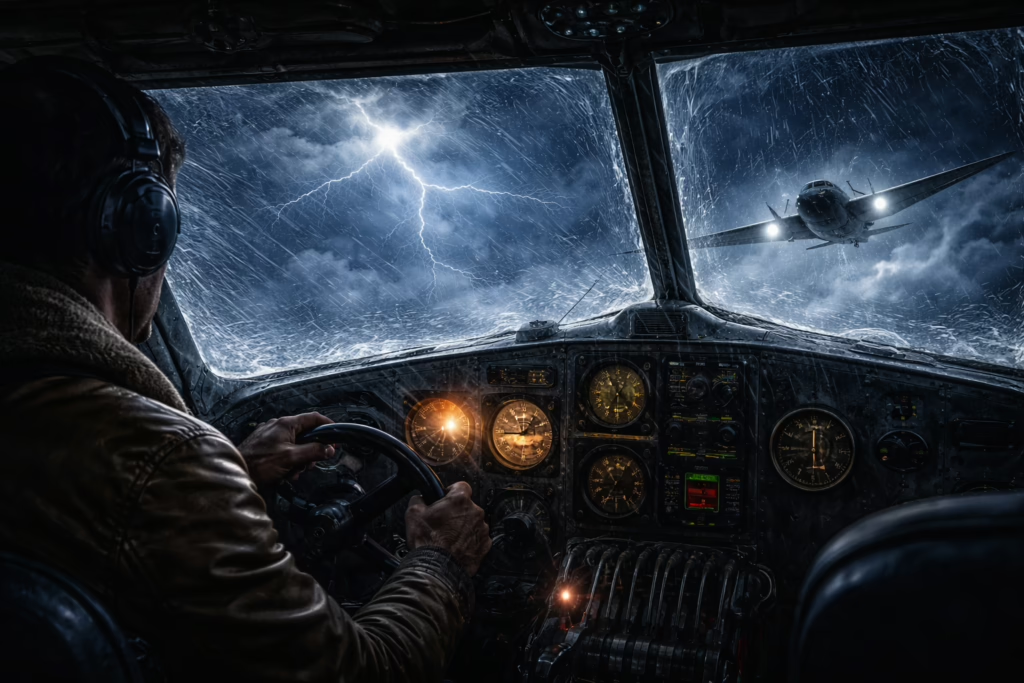
As the narrator enters the storm, everything suddenly turns black. He cannot see anything outside the aeroplane. The plane begins to jump and twist violently in the air. His compass stops working, and all other instruments fail. The radio also goes dead, leaving him completely lost and helpless inside the storm.
3. Why does the narrator say, “I landed and was not sorry to walk away from the old Dakota…”?
The narrator says this because the flight had been extremely dangerous and frightening. His aeroplane had almost crashed due to the storm, lack of fuel, and failed instruments. After landing safely, he feels relieved to be alive and is glad to leave the old Dakota behind.
4. What made the woman in the control centre look at the narrator strangely?
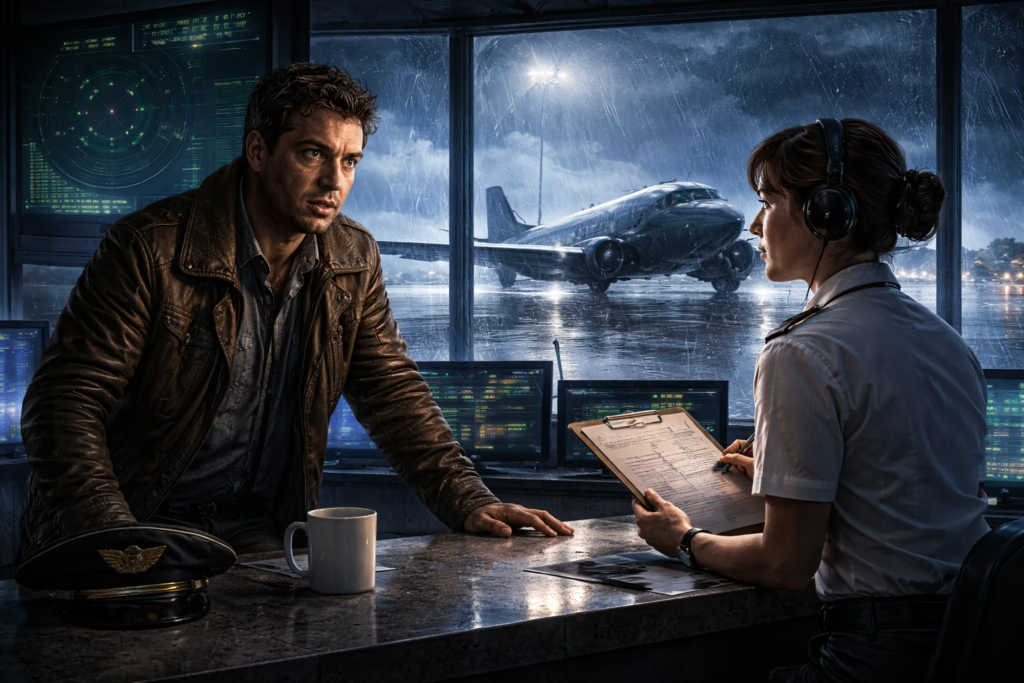
The woman in the control centre looks at the narrator strangely when he asks about the other aeroplane that guided him. She tells him that no other aeroplanes were flying that night due to the storm and that only his plane appeared on the radar. This makes his story seem unbelievable.
5. Who do you think helped the narrator to reach safely? Discuss this among yourselves and give reasons for your answer.
The identity of the pilot in the black aeroplane is a mystery. It may have been a supernatural being, such as an angel or spirit, sent to help the narrator in his time of need. Another possibility is that the narrator imagined the plane due to fear and exhaustion. However, since the guidance leads him safely to the runway despite zero fuel and failed instruments, it seems likely that some mysterious force helped him.
Key Message (Useful for Exams)
The story highlights the importance of faith, hope, and presence of mind during crises. It also suggests that help may come from unexpected or unexplained sources when one is in deep trouble.
“The Black Aeroplane” – Language & Grammar Section
I. Study the use of the word ‘black’
Meanings of ‘black’ in the given sentences
- Go and have a bath; your hands and face are absolutely black.
→ Very dirty - The taxi-driver gave Ratan a black look as he crossed the road when the traffic light was green.
→ Angry / hostile - The bombardment of Hiroshima is one of the blackest crimes against humanity.
→ Cruel / evil - Very few people enjoy Harold Pinter’s black comedy.
→ Dark humour dealing with serious or tragic subjects - Sometimes shopkeepers store essential goods to create false scarcity and then sell these in black.
→ Illegal / black market - Villagers had beaten the criminal black and blue.
→ Badly bruised
II. Match the Phrases (Fly expressions)
Correct Matches
| Column A | Column B |
|---|---|
| 1. Fly a flag | Display a flag on a long pole |
| 2. Fly into rage | Become suddenly very angry |
| 3. Fly along | Move quickly / suddenly |
| 4. Fly high | Be successful |
| 5. Fly the coop | Escape from a place |
III. Tick the words that mean the same or nearly the same as ‘fly’
✔️ Correct answers:
- swoop ✔️
- flit ✔️
- flutter ✔️
- ascend ✔️
- skim ✔️
- dart ✔️
- hover ✔️
- glide ✔️
- descend ✔️
- soar ✔️
- sail ✔️
- flap ✔️
❌ Not correct:
- paddle
- float
- ride
- sink
- shoot
- spring
- stay
- fall

“The Black Aeroplane” – Writing
Have you ever been alone or away from home during a thunderstorm? Narrate your experience in a paragraph.
Sample Answer (Exam-Ready):
Once, I was alone at home during a severe thunderstorm. The sky suddenly turned dark, and loud thunder shook the windows. Heavy rain poured continuously, and frequent lightning flashes made the situation frightening. The electricity went off, and the house felt unusually silent. I felt scared but tried to remain calm by closing all windows and doors. I kept myself busy reading a book and listening to the sound of rain. After some time, the storm passed, and I felt relieved and proud of myself for handling the situation bravely.
“The Black Aeroplane” is a compelling story that highlights the importance of calmness, courage, and hope in moments of extreme danger. Through the narrator’s terrifying experience in the storm, the story shows how human limitations become evident during crises and how survival sometimes depends on faith and unexpected help. The mysterious appearance of the black aeroplane adds a supernatural element that deepens the story’s impact and encourages readers to think beyond logic.
The questions and answers discussed in this article help students gain a thorough understanding of the text, its language usage, and its underlying themes. By engaging with these exercises, learners not only prepare effectively for examinations but also absorb the story’s message—that help can arrive in surprising ways, and presence of mind is essential when facing life’s uncertainties.