Summary of the Poem: Dust of Snow
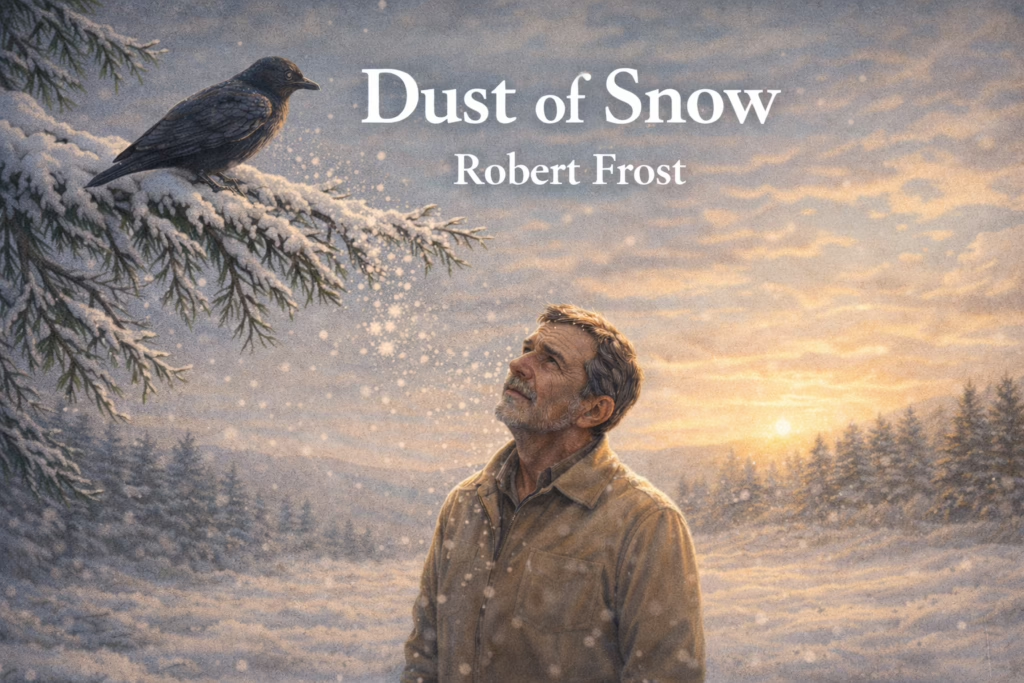
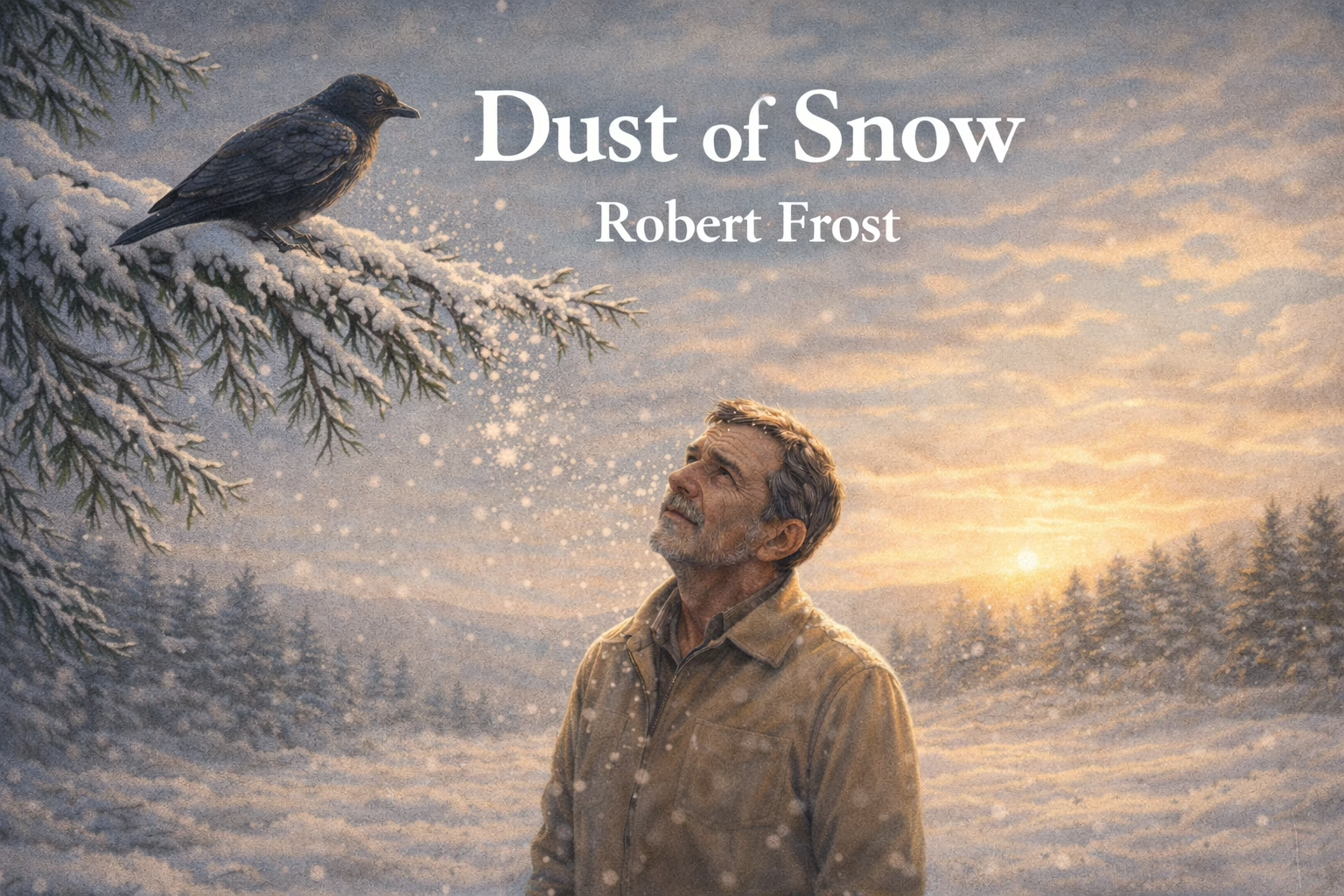
Dust of Snow is a short yet meaningful poem that shows how small, unexpected moments can bring about a positive change in one’s mood and outlook on life. The poet describes a simple incident in which a crow shakes a fine dusting of snow from a hemlock tree onto him.
Although both the crow and the hemlock tree are usually associated with gloom, sorrow, and negativity, the falling snow unexpectedly lifts the poet’s spirits. This minor natural incident changes his mood and saves the rest of a day that he had earlier regretted.
Through this poem, Robert Frost conveys that even a seemingly insignificant experience can remove sadness and restore hope. The poem highlights the healing power of nature and teaches that positivity can arise from the most unlikely sources.

About the Poet – Robert Frost
Robert Frost was one of the most celebrated and widely read poets of the twentieth century. He was born in 1874 in the United States and is remembered as a poet who brought ordinary life, rural settings, and simple language into poetry, while quietly exploring deep and complex human emotions. Although his poems appear easy to understand on the surface, they often carry profound meanings about life, nature, choices, and human psychology.
Robert Frost’s life was marked by hardship and struggle, especially in his early years. He faced repeated failures before gaining recognition as a poet. Farming, teaching, and writing were all parts of his life, and his close association with nature deeply influenced his poetry. Frost did not describe nature merely as scenery; instead, he used it as a mirror to reflect human thoughts, moods, and experiences. This is why nature in his poems often interacts with human emotions rather than standing separately.
Despite achieving fame and literary success later in life, Frost experienced personal sorrow and emotional pain, including loss within his family. These experiences made him a thoughtful and introspective poet. Rather than expressing emotions directly, he preferred to suggest them through small incidents, symbols, and moments drawn from everyday life. His poetry often shows how a minor experience can lead to a major change in thought or feeling.
Robert Frost’s style is known for its clarity, conversational tone, and symbolic depth. He believed that poetry should sound natural, like human speech, yet carry layers of meaning. Poems like Dust of Snow reflect this belief perfectly, as they show how a simple moment in nature can transform a person’s mood and outlook on life.
For Class X students, Robert Frost’s poetry is important because it teaches that life’s lessons are often hidden in simple experiences. His work encourages readers to observe closely, think deeply, and find hope even in unexpected or ordinary moments.

The Story Behind Dust of Snow
In the early years of the twentieth century, when the world was slowly healing from the wounds of war and uncertainty, Robert Frost was already a recognised poet, yet deeply thoughtful and introspective. Success had not erased the emotional weight he carried within him. Frost had known hardship, rejection, and personal loss, and even during peaceful moments, his mind often wandered into reflection. He was a man who believed that life’s deepest meanings were hidden not in grand events, but in ordinary moments that most people passed by without noticing.
One such ordinary moment gave birth to the poem Dust of Snow. Frost imagined—or perhaps truly experienced—a quiet walk on a winter day. It was not a happy day. The poet’s mind was heavy, filled with regret, the kind that makes a whole day feel wasted even before it ends. The world around him seemed cold and dull, mirroring his inner mood. Nothing dramatic had gone wrong, yet everything felt wrong. Many students would recognise this feeling—the quiet sadness of a day that simply does not feel right.
As Frost walked on, lost in thought, something small and unexpected happened. A crow, perched on a hemlock tree, shook its body, and a fine dusting of snow fell gently upon him. It was not a snowfall, not a storm—just a light sprinkle, almost accidental. In that instant, the poet felt something shift inside him. The cold touch of snow did not worsen his mood; instead, it woke him up emotionally. The heaviness lifted, and the sadness loosened its grip. That small moment changed how he felt, and suddenly the rest of the day no longer seemed ruined.
What makes this moment remarkable is Frost’s choice of symbols. The crow and the hemlock tree are not usually seen as pleasant or joyful. Both are commonly associated with darkness, danger, and sorrow. Yet Frost deliberately chose them to show that positivity does not always come from beautiful or cheerful sources. Sometimes, even the most unlikely things can bring comfort. This reflects Frost’s mature understanding of life—that happiness does not depend on perfect circumstances, but on how we respond to the moments we are given.
At the time Frost wrote this poem, the world itself was uncertain. People were recovering emotionally from the trauma of World War I. There was a general feeling of weariness, disappointment, and loss. Against this backdrop, Frost did not preach hope loudly. Instead, he whispered it gently. Through Dust of Snow, he suggested that healing begins quietly, often without warning, and that a single moment of awareness can save an entire day.
The poem was not written because Frost experienced a great joy or a tragic event. It was written because he noticed something small and allowed it to matter. That was Frost’s gift—to turn an everyday incident into a universal truth. In doing so, he reminded readers that even on the darkest days, a small, unexpected moment can restore balance, renew hope, and change how we see the world.

Detailed Analysis of the Poem Dust of Snow
Dust of Snow by Robert Frost is a short poem, but it carries a deep and lasting message about hope, emotional change, and the healing power of small moments. Through a simple incident drawn from nature, Frost shows how a minor, unexpected experience can transform a person’s mood and outlook on life.
The poem opens with a quiet winter scene. The speaker describes how a crow shakes down a “dust of snow” from a hemlock tree onto him. The phrase dust of snow is significant because it suggests a very small amount of snow—light, gentle, and almost accidental. Frost deliberately avoids describing a snowfall or storm. This reflects the idea that the change in the poet’s mood comes not from something grand or dramatic, but from a tiny, ordinary moment.
The choice of a crow and a hemlock tree is highly symbolic. In literature and popular belief, a crow is often associated with darkness, bad luck, or sadness, while the hemlock tree is poisonous and linked with death. By using these traditionally negative symbols, Frost challenges the common expectation that only beautiful or pleasant things can bring happiness. Instead, he suggests that even gloomy or ordinary elements of nature can produce positive emotional change.
The central turning point of the poem occurs when the falling snow changes the poet’s mood. Before this moment, the speaker’s day was one he had “rued,” meaning he felt regretful or unhappy. The sudden touch of snow interrupts his thoughts and lifts his spirits. Importantly, the poet does not claim that his problems disappear. Rather, the moment “saved some part of a day”—a realistic and mature idea. Frost shows that emotional healing does not require complete transformation; even partial relief is meaningful.
Nature in the poem is presented not as powerful or overwhelming, but as gentle and quietly influential. Frost often portrays nature as a partner in human emotional life, and in Dust of Snow, nature plays the role of a silent healer. The poem suggests that nature does not need to be beautiful or dramatic to affect us; its impact often lies in small, unnoticed interactions.
From a technical point of view, the poem is written in simple language and a regular rhyme scheme (ABAB CDCD), which adds to its smooth, calm tone. The simplicity of form reflects the simplicity of the incident described. There are no complex words or elaborate descriptions, making the poem accessible to all readers, while still conveying a profound idea.
The poem’s message is universal and timeless. Everyone experiences days filled with regret, sadness, or frustration. Through this poem, Frost reminds readers—especially young students—that a small, unexpected moment can change how we feel and help us move forward. The poem encourages mindfulness, observation, and openness to change, even from unlikely sources.
Conclusion
In conclusion, Dust of Snow is a powerful example of how Robert Frost uses a brief natural incident to explore deep human emotions. Through symbolism, simplicity, and gentle irony, the poem teaches that hope and renewal often come quietly. The poem leaves readers with a comforting thought: no matter how gloomy a day may seem, a small moment can still make it meaningful.