Summary of the Poem: Fire and Ice
Fire and Ice is a brief but powerful poem in which Robert Frost reflects on how the world might end. The poet presents two possible forces of destruction—fire and ice—and uses them as symbols for destructive human emotions.
In the poem, fire represents intense emotions such as desire, greed, passion, and lust, which can consume people and societies if left uncontrolled. Ice, on the other hand, represents hatred, indifference, coldness, and cruelty, which can slowly freeze human relationships and destroy the world just as effectively. Frost suggests that both forces are equally capable of causing destruction.
Through this comparison, the poet conveys a deeper message that human emotions themselves can lead to the end of humanity if they are not kept in balance. The poem warns readers against extremes of feeling and encourages moderation, understanding, and self-control. Despite its short length, Fire and Ice leaves a strong impression by showing how inner human weaknesses can have catastrophic consequences.

About the Poet – Robert Frost
Robert Frost (1874–1963) was one of the most renowned poets of the twentieth century and a central figure in American literature. He is best known for writing poetry that uses simple, conversational language while exploring deep philosophical ideas about life, human emotions, choices, and moral responsibility.
Robert Frost often drew inspiration from nature and rural life, especially the landscapes of New England. However, nature in his poems is never merely decorative. Instead, it becomes a medium through which human thoughts and emotions are expressed. Frost believed that poetry should sound natural, like everyday speech, but should also carry layers of meaning beneath the surface.
Although Frost achieved great literary success and won the Pulitzer Prize four times, his life was marked by personal struggles, emotional pain, and loss. These experiences made him deeply reflective and shaped his mature outlook on life. Rather than expressing emotions directly, Frost preferred to suggest ideas subtly through symbols, contrasts, and brief moments of insight.
In poems like Fire and Ice, Frost shows his philosophical side by using simple symbols to discuss serious issues such as hatred, desire, and destruction. His poetry warns readers about the dangers of emotional extremes and encourages balance, self-control, and awareness.
For Class X students, Robert Frost is important because his poems teach that even the simplest words and images can convey powerful truths about human life. His work remains relevant because it speaks to universal emotions and timeless moral concerns.
Context of the Poem: Fire and Ice
Fire and Ice was written by Robert Frost in the early twentieth century, a time when the world was passing through deep uncertainty and anxiety. The poem was published in 1920, shortly after World War I, when people had witnessed large-scale destruction, violence, and the collapse of moral values. This historical background strongly influences the poem’s central idea.
During this period, humanity was struggling not only with physical destruction but also with emotional and psychological turmoil. Hatred between nations, unchecked ambition, greed for power, and cold indifference to human suffering had led to catastrophic consequences. Frost observed that the real danger to the world did not lie only in natural forces, but in human emotions and attitudes.
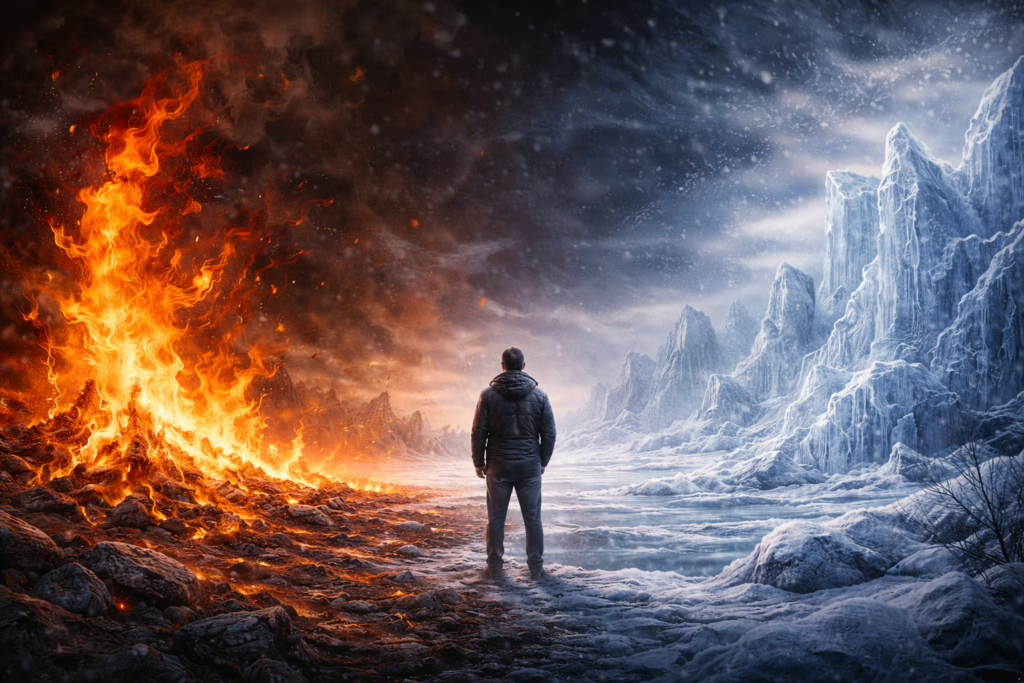
In this context, Frost uses fire and ice as powerful symbols. Fire represents intense human desires such as greed, lust, ambition, and uncontrolled passion—emotions that burn fiercely and spread destruction quickly. Ice, on the other hand, represents hatred, cruelty, intolerance, and emotional coldness—forces that destroy slowly by freezing human relationships and compassion. By placing these two side by side, Frost suggests that both extremes are equally dangerous.
Unlike traditional poems that imagine the end of the world through natural disasters, Frost takes a philosophical approach. He implies that the world may end not because of earthquakes or floods, but because humans fail to control their emotions. The poem reflects Frost’s belief that moral imbalance and emotional extremes pose the greatest threat to humanity.
Thus, Fire and Ice is deeply rooted in its historical and social context. It serves as a warning to readers that unless people learn moderation, tolerance, and understanding, the same destructive emotions that once led to war and suffering could ultimately bring about the end of the world. The poem remains relevant even today, as it continues to remind us of the consequences of unchecked desire and hatred.

Detailed Analysis of the Poem Fire and Ice
Fire and Ice by Robert Frost is a short but intensely thought-provoking poem that deals with the idea of the end of the world. Though the poem consists of only nine lines, it carries deep philosophical meaning and reflects on the destructive power of human emotions.
The poem opens with a reference to different beliefs about how the world might end. Some people believe it will end in fire, while others think it will end in ice. At the literal level, these images suggest two natural disasters—burning and freezing. However, Frost quickly moves beyond the literal meaning and turns these elements into symbols of human behaviour. This shift from physical destruction to emotional and moral destruction forms the core of the poem.
In the poem, fire symbolises intense emotions such as desire, greed, passion, lust, and ambition. These emotions are powerful and consuming. Just as fire spreads rapidly and destroys everything in its path, uncontrolled desire can lead to conflict, violence, and ruin. Frost suggests that human history, filled with wars and exploitation, proves how destructive such fiery emotions can be.
On the other hand, ice symbolises emotions like hatred, indifference, cruelty, intolerance, and emotional coldness. Ice destroys slowly but surely. It freezes warmth, compassion, and human connection. Frost presents ice as equally dangerous as fire, emphasizing that cold hatred and indifference can quietly destroy relationships, societies, and even humanity itself.
One of the most striking features of the poem is Frost’s balanced judgement. Although he says he favours fire because of his personal experience with desire, he does not dismiss ice. Instead, he concludes that ice is also sufficient to destroy the world. This shows Frost’s mature and realistic outlook—he understands that both emotional extremes, whether hot or cold, can be equally fatal.
The tone of the poem is calm, controlled, and ironic, which contrasts sharply with the violent ideas it discusses. Frost does not sound alarmist or emotional. Instead, he presents his thoughts in a conversational and almost casual manner, making the message more powerful. The understatement in the poem forces readers to reflect deeply on its meaning.
From a technical perspective, the poem follows a rhyme scheme of ABAABCBCB, which binds the ideas of fire and ice together. This structure mirrors the poem’s message that although fire and ice are opposites, they are connected by their capacity for destruction. The simple language and short length of the poem make it accessible, yet its meaning is layered and profound.
At a deeper level, Fire and Ice can be read as a moral warning. Frost suggests that the end of the world may not come from natural disasters alone, but from humanity’s inability to control its emotions. The poem urges readers to practice moderation, tolerance, and emotional balance.
Conclusion
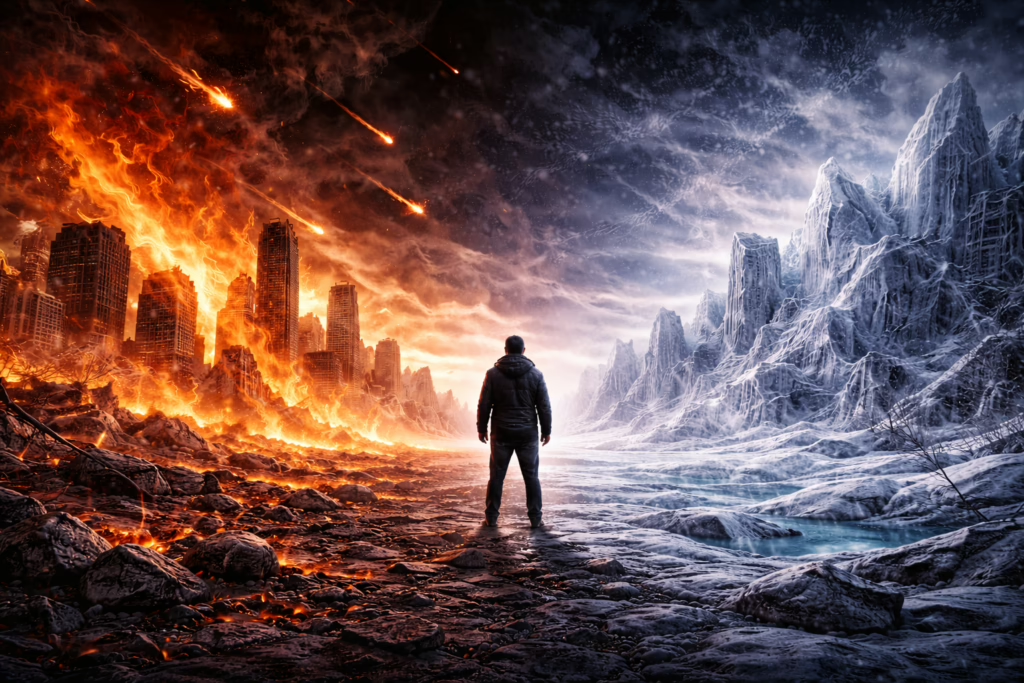
In conclusion, Fire and Ice is a powerful example of Robert Frost’s ability to express complex ideas through simple images. By using fire and ice as symbols of destructive human emotions, Frost warns against emotional extremes and highlights the importance of balance in human life. Despite its brevity, the poem leaves a lasting impact and remains relevant in every age, making it one of Frost’s most memorable philosophical poems.