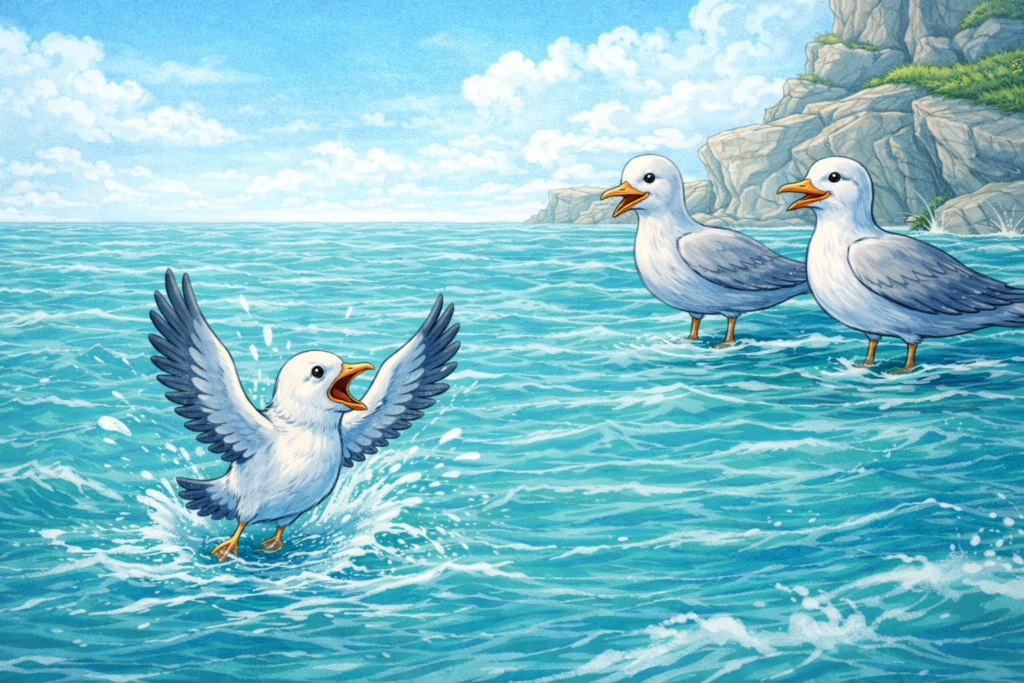
“His First Flight” by Liam O’Flaherty is one of the most inspiring and relatable stories included in the CBSE Class 10 English textbook First Flight. Through the simple yet powerful journey of a young seagull who is afraid to fly, the story explores universal themes of fear, courage, self-belief, and the importance of parental guidance. The narrative beautifully mirrors human experiences, such as a child learning to walk or attempting something new for the first time.
This article presents well-structured answers to all the textual, analytical, and writing-based questions associated with the lesson, including the Before You Read, Thinking About the Text, and Writing sections. The answers are carefully framed in simple language, aligned with CBSE marking schemes, and designed to help students not only score well in examinations but also understand the deeper message of the story. Together, these questions and answers aim to strengthen comprehension, encourage critical thinking, and highlight the moral values conveyed through the seagull’s unforgettable first flight.
BEFORE YOU READ – Answers
1. A young seagull is afraid to fly. How does he conquer his fear?
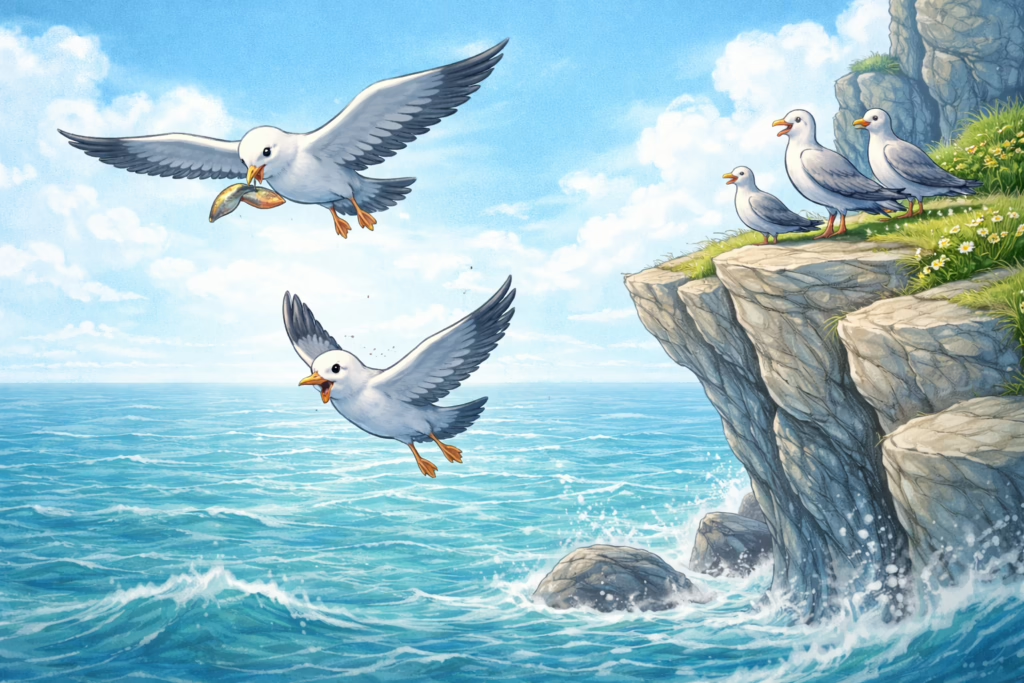
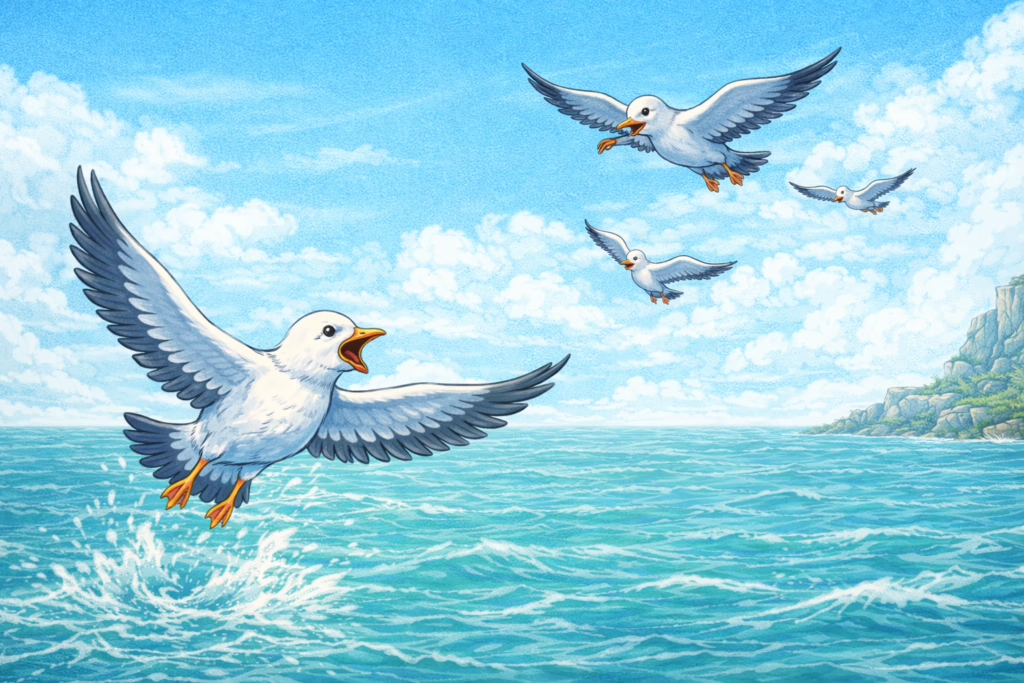
The young seagull is initially afraid to fly because he thinks his wings will not support him. His fear is conquered when hunger forces him to dive for a piece of fish held by his mother. As he falls, his wings spread automatically, and he discovers that he can fly. This realization removes his fear forever.
2. A pilot is lost in storm clouds. Does he arrive safe? Who helps him?
Yes, the pilot arrives safely. He is helped by a mysterious black aeroplane that guides him through the storm when his compass, radio, and fuel fail. The identity of the pilot remains unknown, giving the story a mysterious ending.
THINKING ABOUT THE TEXT – Answers
1. Why was the young seagull afraid to fly? Do you think all young birds are afraid to make their first flight? Do you think a human baby also finds it a challenge to take its first steps?
The young seagull was afraid to fly because he believed that his wings would not support him and that he would fall into the vast sea below. The height terrified him, and his fear overpowered his natural instinct.
Not all young birds are equally afraid. Some are more confident, while others are timid by nature.
Yes, a human baby also finds it challenging to take its first steps. Like the seagull, a baby fears falling but gradually learns to walk through encouragement and practice.
2. “The sight of the food maddened him.” What does this suggest? What compelled the young seagull to finally fly?
This statement suggests that the seagull was extremely hungry and desperate for food. Hunger made him restless and overcame his fear.
He was finally compelled to fly because his mother stopped just short of the ledge with a piece of fish. Driven by hunger, he dived towards the food and accidentally began flying.
3. “They were beckoning to him, calling shrilly.” Why did the seagull’s father and mother threaten him and cajole him to fly?
The seagull’s parents threatened and encouraged him because they wanted him to become independent. Flying was necessary for survival, and they knew that unless he faced his fear, he would never learn. Their actions were strict but caring, meant to help him grow.
4. Have you ever had a similar experience where your parents encouraged you to do something you were too scared to try?
Yes, many students experience this while learning to ride a bicycle, swim, or speak on stage. Parents often push children gently, believing in their abilities even when the child is afraid. Such encouragement helps build confidence and courage.
(This is a value-based question; answers may vary.)
5. In the case of a bird flying, it seems a natural act. In similar human experiences, is success guaranteed, or is it important to try regardless of failure?
Success is not always guaranteed in human experiences. However, it is important to try regardless of the possibility of failure. Effort leads to learning, growth, and confidence. Even failure teaches valuable lessons and prepares one for future success.
THEME-BASED SHORT ANSWER (Useful for Exams)
What is the central message of “His First Flight”?
The story conveys that fear can be overcome by courage, necessity, and self-belief. Support and encouragement from family play a vital role in personal growth, and sometimes one must take risks to discover one’s true potential.
WRITING SECTION – ANSWERS
1. Write a short composition on your initial attempts at learning a skill.
(Example: learning to ride a bicycle or learning to swim.)
Make it as humorous as possible.
Sample Answer (Learning to Ride a Bicycle):
My first attempt at learning to ride a bicycle was both terrifying and funny. The bicycle looked harmless, but the moment I sat on it, it turned into a monster determined to throw me off. My father held the back of the seat tightly, assuring me that he would not let go. Trusting him, I began pedalling with great confidence—until I suddenly realized that he had let go long ago.
Within seconds, I lost my balance and landed straight into a bush. My knees were bruised, my confidence shaken, and the bicycle lay triumphantly beside me. However, after a few more falls and much laughter from my friends, I slowly learned to balance. When I finally rode without support, the joy was unforgettable. Those painful falls taught me an important lesson—that success comes only after courage and persistence.
Alternative Sample (Learning to Swim):
Learning to swim was an adventure full of fear and embarrassment. On the first day, the swimming pool looked deeper than the ocean itself. The instructor confidently pushed me into the water, and I immediately forgot all instructions and started splashing wildly like a drowning fish. Everyone around me laughed while I swallowed half the pool.
Gradually, with practice and encouragement, I learned to float and paddle. One day, I realized that I was swimming without fear. The experience taught me that fear disappears once we face it. What once scared me now gives me joy.
“His First Flight” beautifully conveys the idea that fear is a natural part of growth, but it can be overcome through courage, persistence, and timely encouragement. The young seagull’s journey from hesitation to confidence reflects the struggles faced by every learner when attempting something new. Through its simple storyline and powerful message, the lesson teaches students the value of self-belief, independence, and parental support.
The questions and answers discussed in this article help deepen the understanding of the text while encouraging students to connect the story with real-life experiences. By engaging with these exercises, students not only prepare effectively for examinations but also absorb the moral lesson that true progress begins when one dares to take the first step—or in this case, the first flight.