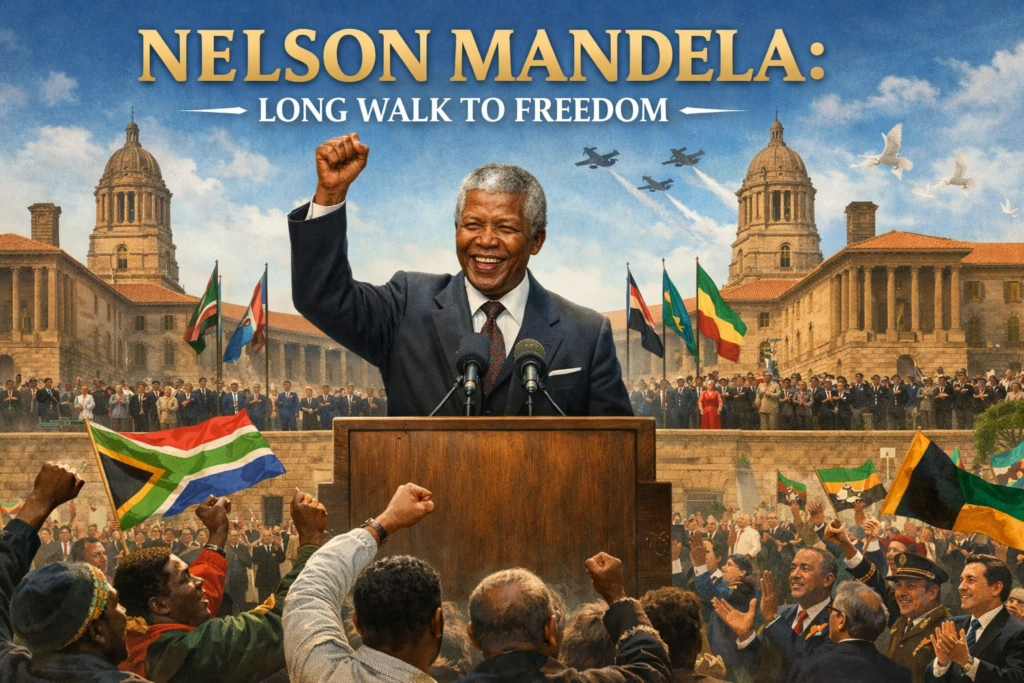
Nelson Mandela: Long Walk to Freedom is a powerful autobiographical extract that captures a historic moment in South Africa’s struggle against apartheid. Through his inauguration speech as the country’s first Black President, Mandela reflects on decades of racial oppression, the sacrifices of countless freedom fighters, and the true meaning of freedom, courage, and humanity. This chapter is not only a lesson in history but also a moral guide that teaches values such as equality, forgiveness, and unity.
This article presents all the important questions and answers prescribed by CBSE—including Before You Read, vocabulary activities, oral comprehension checks, and long-answer questions—explained in simple, exam-friendly language. Designed especially for Class X students, these answers follow the latest CBSE marking standards and aim to help learners understand the text clearly, revise effectively, and score well in examinations. Nelson Mandela: Long Walk to Freedom is a powerful autobiographical extract that captures a historic moment in South Africa’s struggle against apartheid. Through his inauguration speech as the country’s first Black President, Mandela reflects on decades of racial oppression, the sacrifices of countless freedom fighters, and the true meaning of freedom, courage, and humanity. This chapter is not only a lesson in history but also a moral guide that teaches values such as equality, forgiveness, and unity.
This article presents all the important questions and answers prescribed by CBSE—including Before You Read, vocabulary activities, oral comprehension checks, and long-answer questions—explained in simple, exam-friendly language. Designed especially for Class X students, these answers follow the latest CBSE marking standards and aim to help learners understand the text clearly, revise effectively, and score well in examinations.
BEFORE YOU READ – ANSWERS
1. ‘Apartheid’ is a political system that separates people according to their race. Which of the following countries had such a system until very recently?
Answer:
South Africa had a political system of apartheid until very recently.
2. Have you heard of Nelson Mandela? Who was he and what role did he play in ending apartheid?
Answer:
Yes, Nelson Mandela was a South African leader and freedom fighter. He fought against the system of apartheid through the African National Congress (ANC). He spent about thirty years in prison for his struggle. After the end of apartheid, he became South Africa’s first Black President in 1994.
3. Mandela speaks about a historic occasion called “the inauguration”. What do you think this occasion might be?
Answer:
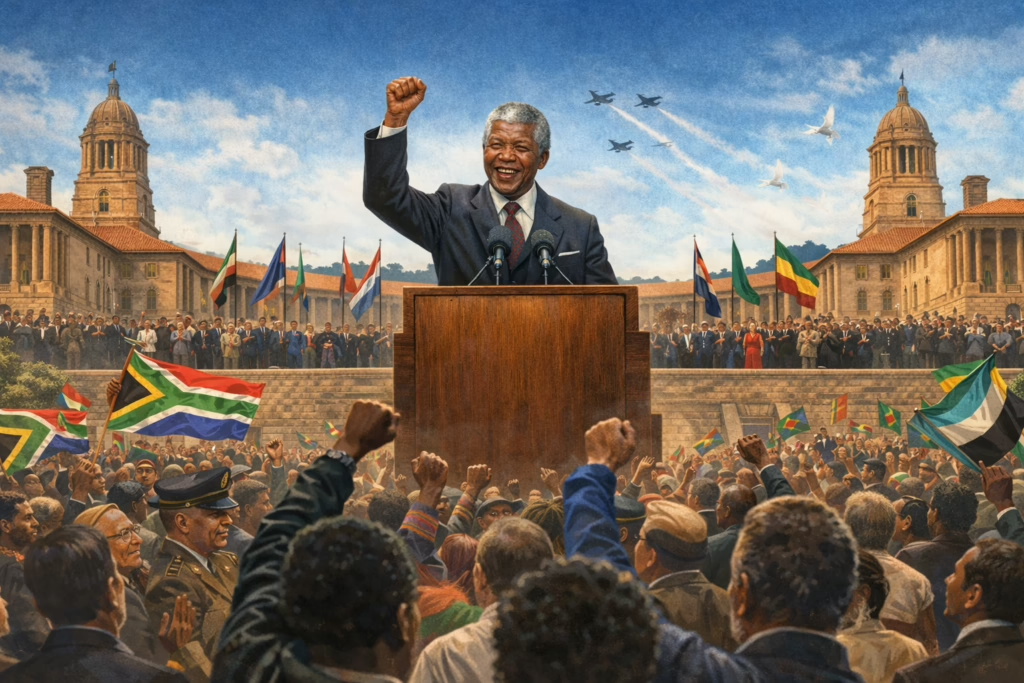
The inauguration refers to the ceremony where Nelson Mandela was sworn in as the first Black President of South Africa after the country’s first democratic elections in 1994.
4. What does the news report (BBC, 10 May 1994) tell us about this historic event?
Answer:
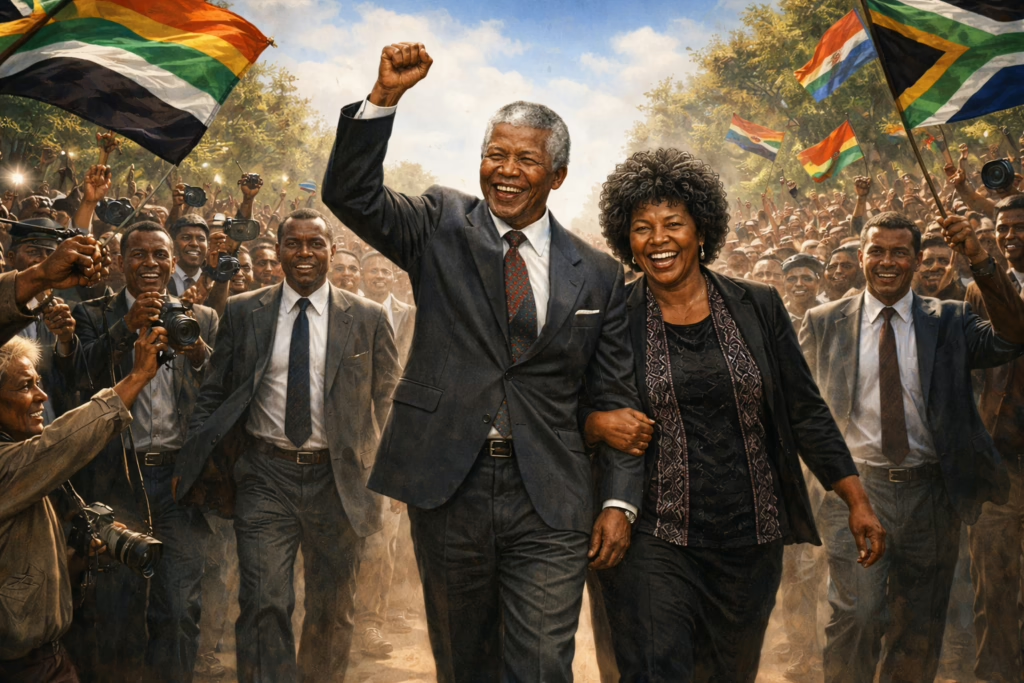
The news report states that Nelson Mandela became South Africa’s first Black President, ending more than three centuries of white rule. Leaders from over 140 countries attended the ceremony, and people of all races celebrated together, symbolising unity, freedom, and the end of oppression.
ACTIVITY – Vocabulary Matching (Table Format)
| Sl. No. | Expression (Column A) | Correct Meaning (Column B) |
|---|---|---|
| 1 | A rainbow gathering of different colours and nations | A beautiful coming together of various peoples, like the colours in a rainbow |
| 2 | The seat of white supremacy | The centre of racial superiority |
| 3 | Be overwhelmed with a sense of history | Feel deeply emotional, remembering and understanding all the past events that led to the moment |
| 4 | Resilience that defies the imagination | A great ability to remain unchanged by suffering without losing hope or courage |
| 5 | A glimmer of humanity | A sign of human feeling such as kindness, goodness, pity, or justice |
| 6 | A twilight existence | A half-secret life lived in difficulty, like life between sunset and darkness |
ORAL COMPREHENSION CHECK – I
1. Where did the ceremonies take place? Can you name any public buildings in India made of sandstone?
The ceremonies took place in the sandstone amphitheatre of the Union Buildings in Pretoria, South Africa.
In India, public buildings made of sandstone include the Red Fort, Rashtrapati Bhavan, and India Gate.
2. Why is 10 May called an ‘autumn day’ in South Africa?
South Africa lies in the Southern Hemisphere, where seasons are opposite to those in India. Hence, May marks autumn there, unlike India where it is summer.
ORAL COMPREHENSION CHECK – II
3. What does Mandela mean by “an extraordinary human disaster”? What is the “glorious human achievement”?
The “extraordinary human disaster” refers to apartheid, which caused prolonged suffering, injustice, and racial oppression.
The “glorious human achievement” is the end of apartheid and the establishment of a democratic, non-racial government in South Africa.
4. What does Mandela thank the international leaders for?
Mandela thanks them for supporting South Africa’s struggle against apartheid and for sharing the victory of democracy, justice, and human dignity with its people.
5. What ideals does Mandela set out for the future of South Africa?
Mandela promises:
- Freedom from poverty and discrimination
- Equality and dignity for all citizens
- A society based on justice, peace, and human rights
ORAL COMPREHENSION CHECK – III
1. What do the military generals do? How has their attitude changed, and why?
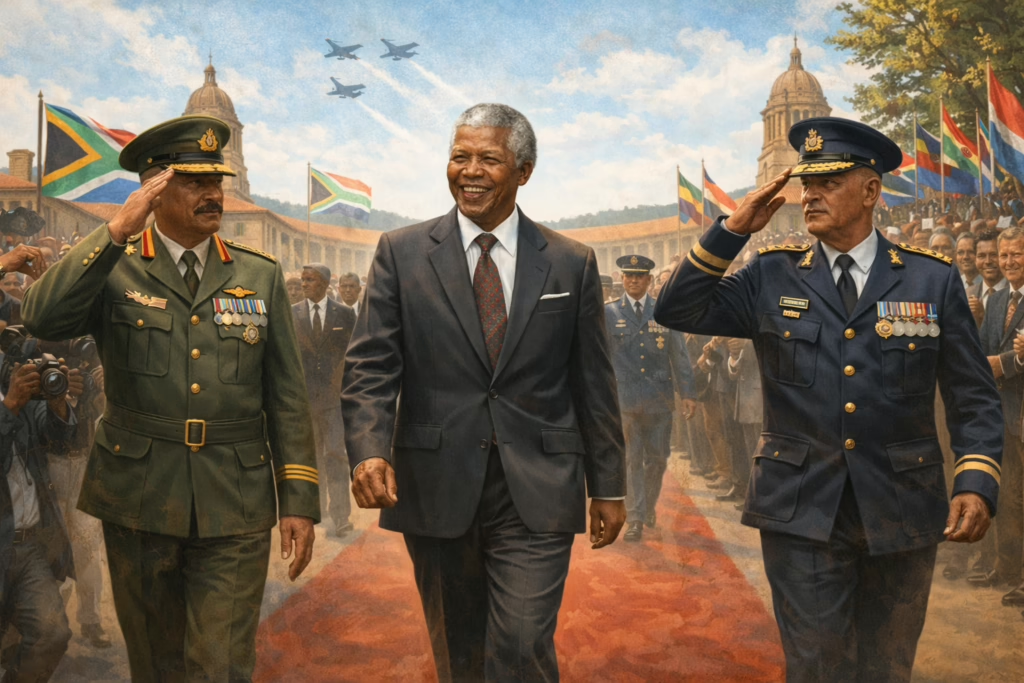
The generals salute Mandela and pledge loyalty to the new democratic government.
Earlier, they would have arrested him. Their attitude changed because democracy replaced apartheid, and Mandela became the elected President.
2. Why were two national anthems sung?
Two anthems were sung to symbolise unity between blacks and whites, representing reconciliation and the end of racial divisions.
3. How does Mandela describe the systems of government in South Africa?
- Early 20th century: A brutal system of racial domination by whites
- Late 20th century: A democratic system recognising equal rights and freedoms
4. What does courage mean to Mandela?
Courage is not the absence of fear, but the ability to overcome fear.
5. Which does Mandela think is natural—love or hate?
Mandela believes love is natural, while hate is learned.
ORAL COMPREHENSION CHECK – IV
1. What “twin obligations” does Mandela mention?
- Duty towards family
- Duty towards country and people
2. What did freedom mean to Mandela as a boy and as a student?
- As a boy: Physical and natural freedom
- As a student: Temporary personal freedoms
These were limited compared to the basic freedoms of dignity and equality.
3. Does Mandela think the oppressor is free? Why/Why not?
No. The oppressor is a prisoner of hatred and prejudice, lacking true humanity.
THINKING ABOUT THE TEXT
1. Why did many international leaders attend the inauguration? What did it signify?
They attended because it was a historic global event.
It signified the triumph of democracy, justice, and equality over apartheid.
2. What does Mandela mean by “I am simply the sum of all those African patriots”?
He means that his success was possible due to the sacrifices of countless freedom fighters before him.
3. Do “depths of oppression” create “heights of character”? Explain.
Yes. Mandela shows that oppression produced leaders like Tambo and Sisulu, whose courage and integrity were shaped by suffering.
4. How did Mandela’s understanding of freedom change with age?
- As a boy: Freedom meant personal enjoyment
- As a man: Freedom meant dignity, equality, and rights for all people
5. How did Mandela’s hunger for freedom change his life?
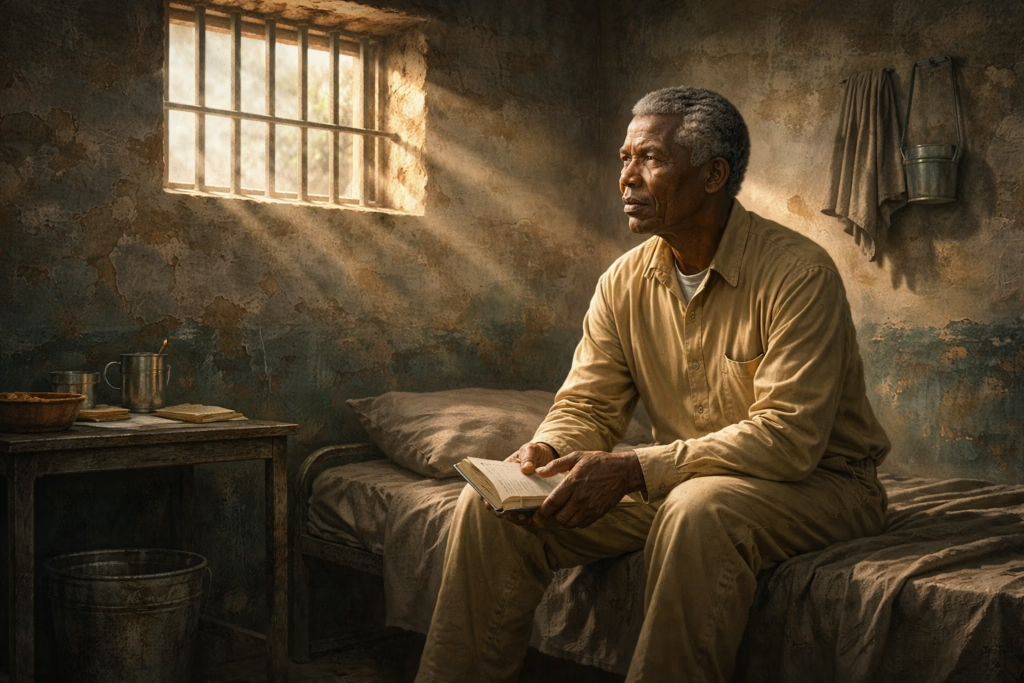
It turned him from a law-abiding lawyer into a revolutionary, forcing him to sacrifice family life and personal comfort.
THINKING ABOUT LANGUAGE
I. Verb–Noun Pairs
| Verb | Noun |
|---|---|
| rebel | rebellion |
| govern | government |
| constitute | constitution |
| oppress | oppression |
| discriminate | discrimination |
| liberate | liberation |
| dominate | domination |
| elect | election |
II. Fill in the Blanks
Answers (in order):
contribution, assistance, subjugation, humiliation, imprisonment, resistance
III. Idiomatic Expressions
| Phrase | Meaning |
|---|---|
| not unmindful of | aware of |
| pushed to our limits | unable to endure more |
| keep me going | continue with hope |
| earning my keep | earning enough to live |
GRAMMAR & LANGUAGE
I. Verb–Noun Pairs
- rebel → rebellion
- constitute → constitution
- govern → government
- oppress → oppression
- discriminate → discrimination
II. Fill in the Blanks (Noun Forms)
Answers: contribution, assistance, subjugation, humiliation, imprisonment, resistance
III. Idiomatic Expressions (Correct Matches)
- not unmindful of → was aware of
- pushed to our limits → could not endure more suffering
- keep me going → continue with hope
- earning my keep → earning enough to live on
WRITING / OPINION-BASED (Exam Ready)
WRITING – I
Speech Topic:
“True liberty is freedom from poverty, deprivation and all forms of discrimination.”
Speech (Approx. 2 minutes | CBSE Standard)
Respected teacher and my dear friends,
Today I am here to speak on the topic “True liberty is freedom from poverty, deprivation and all forms of discrimination.”
True freedom does not only mean political independence. A person cannot be called free if he is hungry, uneducated, or treated unfairly because of his caste, colour, religion, or gender. Poverty deprives people of basic necessities such as food, shelter, education, and healthcare. Discrimination further deepens inequality and denies people their dignity.
To overcome poverty, governments must focus on education, employment, and equal opportunities. Social awareness is also necessary to remove discrimination based on gender, religion, or class. Our Constitution guarantees fundamental rights such as equality, freedom, and justice to every citizen, but it is our duty to respect and protect these rights.
True liberty can exist only when every individual lives with dignity, self-respect, and equal opportunities. Only then can a nation call itself truly free.
Thank you.
WRITING – II: Looking at Contrasts — ANSWERS
1. For decades the Union Buildings had been the seat of white supremacy, and now …
Completed contrast:
“…and now it was the site of a rainbow gathering of different colours and nations.”
Signal word: and now
2. Only moments before, the highest generals of the South African defence force and police … saluted me and pledged their loyalty. … not so many years before they would not have saluted …
Completed contrast:
“…saluted me and pledged their loyalty. Not so many years before they would not have saluted but arrested me.”
Signal words: only moments before / not so many years before
3. Although that day neither group knew the lyrics of the anthem …, they would soon …
Completed contrast:
“…they would soon know the words by heart.”
Signal word: although
4. My country is rich in the minerals and gems that lie beneath its soil, …
Completed contrast:
“…but I have always known that its greatest wealth is its people.”
Signal word: but
5. The Air Show was not only a display of pinpoint precision and military force, but …
Completed contrast:
“…but a demonstration of the military’s loyalty to democracy, to a new government that had been freely and fairly elected.”
Signal structure: not only … but
6. It was this desire for the freedom of my people … that transformed … into a bold one, that drove … to become a criminal, that turned … into a man without a home.
Completed contrast (full sentence restored):
“It was this desire for the freedom of my people to live their lives with dignity and self-respect that animated my life, that transformed a frightened young man into a bold one, that drove a law-abiding attorney to become a criminal, that turned a family-loving husband into a man without a home.”
Signal structure: that transformed / that drove / that turned (parallel contrast)
WRITING – III
Colour Prejudice in Our Country (100–150 words – Model Answer)
India still faces discrimination based on colour, caste, religion, and gender. Dark-skinned people are often judged unfairly, especially in social and professional spaces. Such prejudice contradicts the values of equality guaranteed by our Constitution. Education, awareness, and strict laws are essential to eliminate this mindset. True freedom exists only when every individual is treated with dignity and respect, regardless of appearance or background.
HOMOPHONES (SHORT VERSE) – ANSWERS
Question:
Can you find the words below that are spelt similarly, and sometimes even pronounced similarly, but have very different meanings? Check their pronunciation and meaning in a dictionary.
1. The bandage was wound around the wound.
| Word | Pronunciation | Meaning |
|---|---|---|
| wound (verb) | /wuːnd/ | Wrapped or twisted |
| wound (noun) | /waʊnd/ | An injury |
2. The soldier decided to desert his dessert in the desert.
| Word | Pronunciation | Meaning |
|---|---|---|
| desert (verb) | /dɪˈzɜːt/ | To abandon |
| dessert (noun) | /dɪˈzɜːt/ | Sweet dish eaten after meals |
| desert (noun) | /ˈdezət/ | Dry, sandy region |
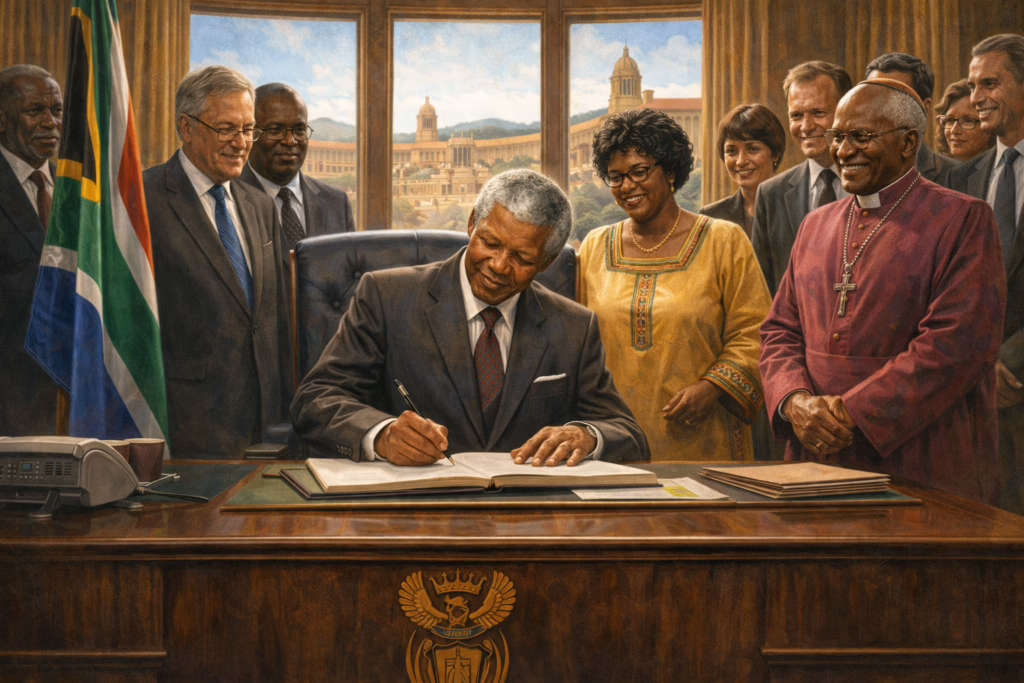
Nelson Mandela: Long Walk to Freedom is a deeply inspiring chapter that helps students understand the true meaning of freedom, courage, and human dignity. Through Mandela’s personal experiences and reflections, the text highlights the cruelty of apartheid and the strength required to overcome injustice without hatred. The questions and answers discussed in this article cover every important aspect of the lesson—from vocabulary and comprehension to critical thinking and values-based learning.
By studying these well-explained answers, students can gain a thorough understanding of the chapter while also learning important life lessons about equality, tolerance, and unity. Regular revision of these questions will not only prepare learners effectively for examinations but also help them appreciate the moral and historical significance of Nelson Mandela’s struggle for freedom.