Summary of On the Face of It – Susan Hill
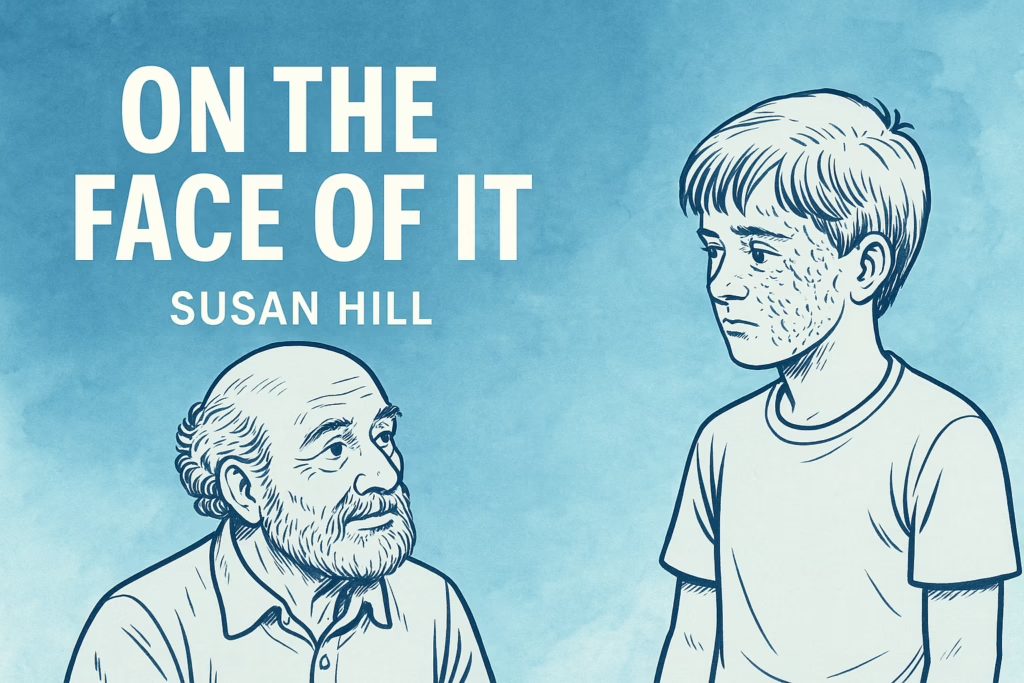
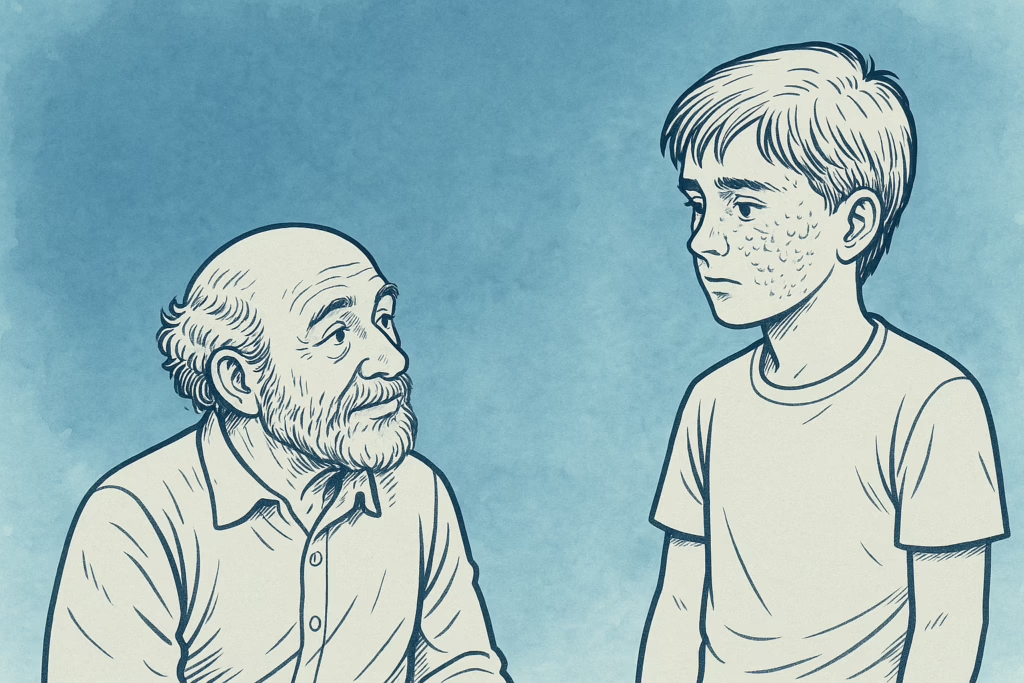
On the Face of It is a one-act play by Susan Hill that explores the themes of isolation, prejudice, and the healing power of human connection. The play centers on an unexpected meeting between Mr Lamb, an old man with a tin leg, and Derry, a fourteen-year-old boy whose face has been badly scarred by an acid accident.
Derry, withdrawn and bitter due to the cruel reactions of people toward his disfigured face, enters Mr Lamb’s garden believing it to be empty. Mr Lamb welcomes him warmly and speaks to him with honesty and compassion, treating him as a normal human being rather than an object of pity. Through their conversation, Mr Lamb challenges Derry’s negative outlook on life and helps him understand that physical disability does not define a person’s worth.
Mr Lamb shares his philosophy of openness and courage, symbolized by his open garden gate and curtain-less windows. He believes in embracing the world despite its risks and rejects the idea of shutting oneself away out of fear. Gradually, Derry begins to feel accepted and hopeful, realizing that he does not have to live in isolation or self-hatred.
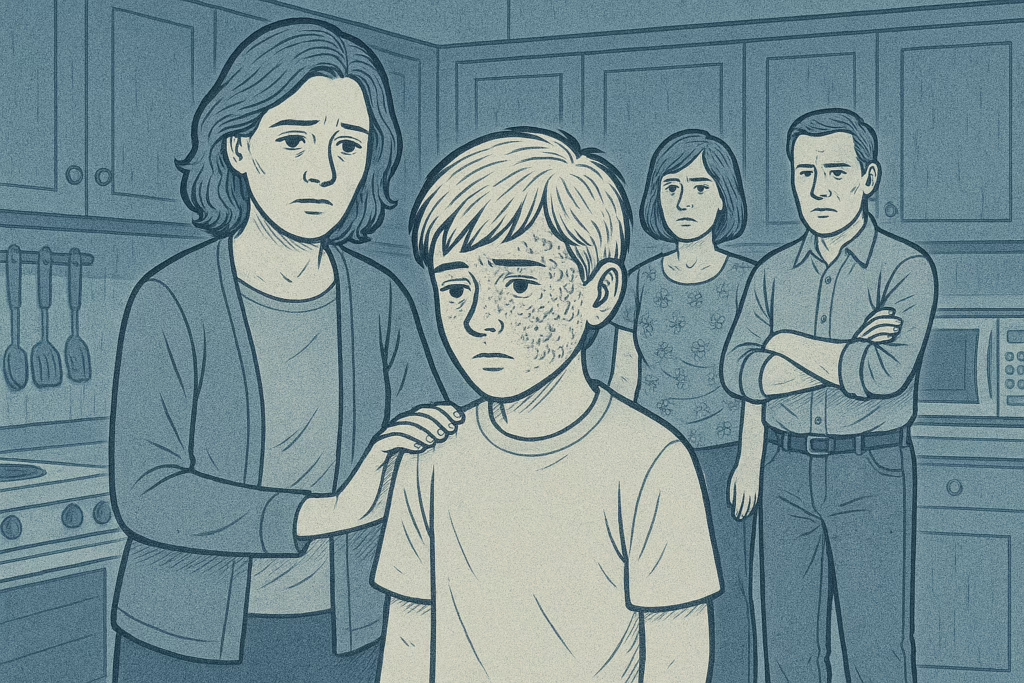
However, when Derry returns home, his mother—driven by fear and social prejudice—forbids him from meeting Mr Lamb again. Determined not to remain confined and lonely, Derry defies her and runs back to the garden, only to find that Mr Lamb has fallen from a ladder and died.
The play ends tragically, but it leaves a lasting impact. Although Mr Lamb dies, his influence transforms Derry. The brief relationship gives Derry the courage to face the world, suggesting that true change comes from understanding, acceptance, and inner strength rather than outward appearance.
About the Author – Susan Hill
Susan Hill is a renowned British novelist, playwright, and short story writer, best known for her exploration of psychological depth, human emotions, and social issues in her works. She was born on 5 February 1942 in Scarborough, Yorkshire, England. Susan Hill studied English at King’s College, London, where she began writing seriously while still a student.
She has written across a wide range of genres, including novels, plays, short stories, children’s books, and ghost stories. One of her most famous works is The Woman in Black, a classic modern ghost story that has been adapted into a successful stage play and films. Her writing is known for its clear style, emotional sensitivity, and strong character portrayal.
In the play On the Face of It, Susan Hill highlights important themes such as physical disability, loneliness, social prejudice, and the need for human understanding. Through simple dialogue and realistic situations, she conveys deep moral messages about acceptance and inner strength. Her works often encourage readers to look beyond appearances and reflect on the true meaning of compassion and courage.
Before You Read
What is the bond that unites the two?
The bond that unites Mr Lamb and Derry is their shared experience of physical disability and social isolation. Both have been judged and marginalized by society because of their physical impairments, which helps them understand each other deeply and develop a meaningful emotional connection.
Scene One – Read and Find Out
Who is Mr Lamb?
Mr Lamb is an old man who lives alone in a large house with an open garden. He has a tin leg, having lost his real leg in a war, and he welcomes people into his garden with openness and warmth.
How does Derry get into his garden?
Derry enters Mr Lamb’s garden by climbing over the garden wall, even though the gate is always open, because he believes the place to be empty and wants to avoid being seen.
In-text Questions (During the Play)
Why does Derry think people are afraid of him?
Derry thinks people are afraid of him because his face is badly disfigured by acid burns, and he believes that people feel fear, pity, or disgust when they look at him.
Why does Mr Lamb change the subject when Derry talks about his face?
Mr Lamb changes the subject to prevent Derry from feeling more hurt or isolated. He wants Derry to focus on life, nature, and possibilities rather than remain trapped in self-pity.
Why does Mr Lamb say beauty and ugliness are relative?
Mr Lamb says beauty and ugliness are relative because he believes that external appearance does not define a person’s worth. He emphasizes inner qualities, perspective, and attitude toward life.
Why does Derry say people pretend not to notice his face?
Derry says this because he feels that people deliberately avoid talking about his disfigurement out of discomfort, which makes him feel more alienated rather than accepted.
Why does Mr Lamb keep his windows open and not use curtains?
Mr Lamb keeps his windows open because he does not like shutting himself off from the world. He enjoys light, air, sounds, and openness, which symbolize his positive and accepting attitude toward life.

Read and Find Out (Page 53)
Do you think all this will change Derry’s attitude towards Mr Lamb?
Yes, Mr Lamb’s words and behavior gradually change Derry’s attitude toward him. Derry begins to trust Mr Lamb, feel accepted, and develop hope about life and relationships.
Scene Two – Derry and His Mother
Why does Derry’s mother not want him to go back to Mr Lamb’s house?
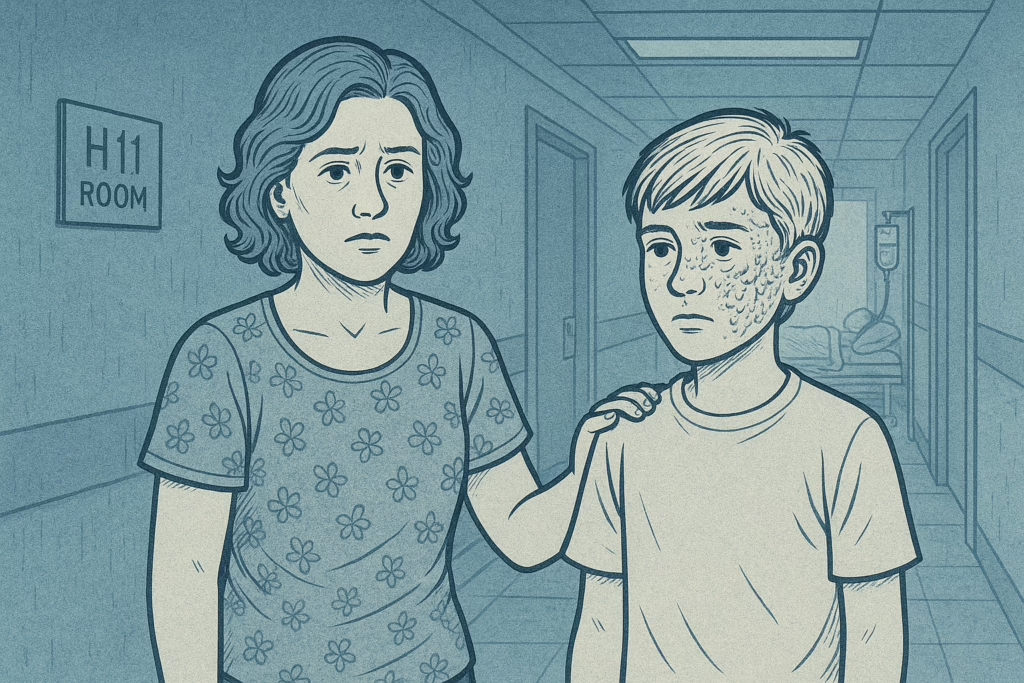
Derry’s mother does not want him to go back because she has heard rumors about Mr Lamb and fears for her son’s safety. Her reaction is driven by overprotectiveness and social prejudice.
Why does Derry insist on going back to Mr Lamb’s garden?
Derry insists on going back because Mr Lamb’s garden represents freedom, acceptance, and a chance to experience the world without judgment. He feels that staying away would trap him in lifelong isolation.
Scene Three – Ending
What happens when Derry returns to Mr Lamb’s garden?
When Derry returns, he finds that Mr Lamb has fallen from the ladder and is dead. This tragic moment deeply affects Derry and marks a turning point in his emotional growth.
Reading with Insight
1. What is it that draws Derry towards Mr Lamb in spite of himself?
Derry is drawn to Mr Lamb because Mr Lamb treats him like a normal human being and not as an object of pity or fear. His honesty, warmth, and acceptance give Derry confidence and emotional comfort.
2. In which section of the play does Mr Lamb display signs of loneliness and disappointment? What are the ways in which Mr Lamb tries to overcome these feelings?
Mr Lamb shows signs of loneliness at the end of Scene One when he says that people promise to return but never do. He overcomes his loneliness by keeping his garden gate open, welcoming people, engaging with nature, reading books, and maintaining a positive outlook on life.
3. The actual pain or inconvenience caused by a physical impairment is often much less than the sense of alienation felt by the person with disabilities. What kind of behaviour does the person expect from others?
A person with disabilities expects understanding, acceptance, respect, and normal treatment from others instead of pity, fear, or avoidance. They want to be seen as individuals rather than defined by their disability.
4. Will Derry get back to his old seclusion or will Mr Lamb’s brief association effect a change in the kind of life he will lead in the future?
Mr Lamb’s brief association will bring a lasting change in Derry’s life. Although Mr Lamb dies, his ideas and encouragement inspire Derry to face the world with courage instead of withdrawing into isolation.
How About… (Creative Answer)
Suggest another ending to the story.
In an alternative ending, Mr Lamb survives the fall, and Derry returns in time to help him. Their bond strengthens further, and Derry gradually begins interacting with the outside world, carrying forward Mr Lamb’s message of openness, courage, and acceptance.