Summary of “The Black Aeroplane”
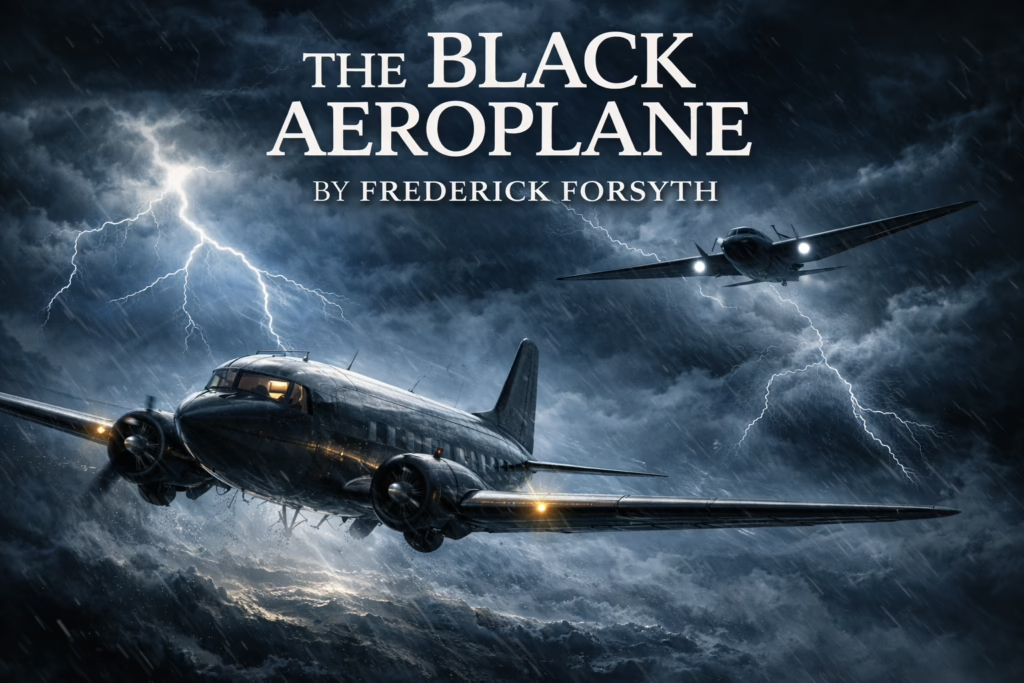
“The Black Aeroplane” by Frederick Forsyth is a mysterious and suspenseful story about a pilot’s narrow escape from danger. The narrator is flying his old Dakota aeroplane from France to England on a clear night. Everything seems perfect, and he is looking forward to reaching home safely.
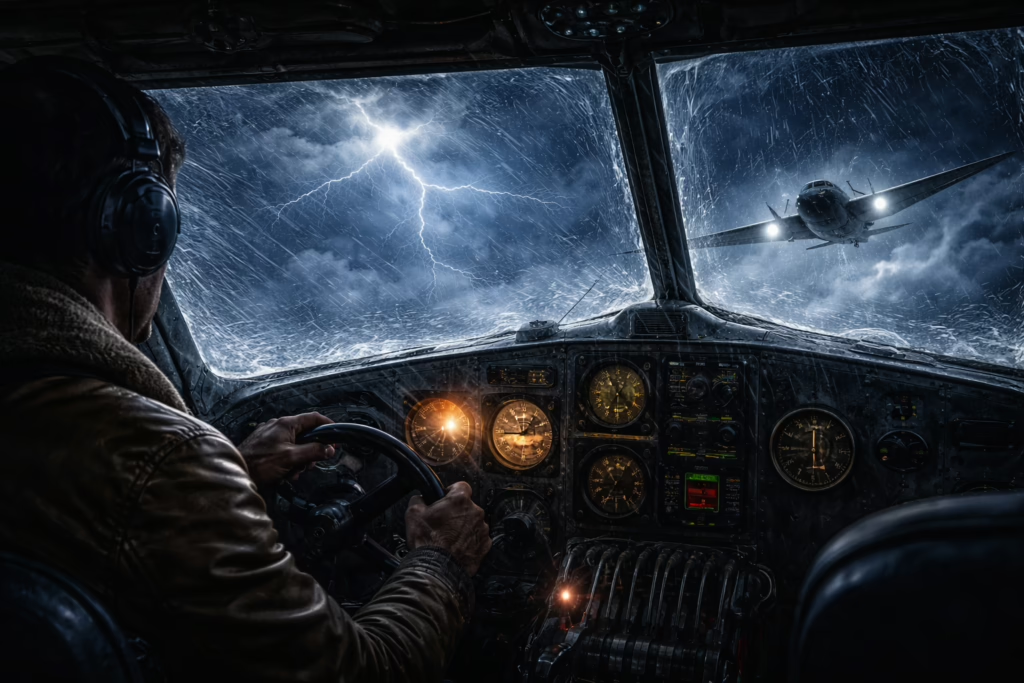
Suddenly, he encounters massive storm clouds. Although he knows it is risky and has limited fuel, he decides to fly into the storm instead of turning back. Inside the clouds, visibility becomes zero, the aeroplane is violently shaken, and all the instruments—including the compass and radio—stop working. The pilot realizes that he is lost and nearly out of fuel.
At this critical moment, he sees another aeroplane flying beside him. The pilot of the mysterious black aeroplane signals him to follow. Trusting this unknown guide, the narrator follows the plane through the storm. Soon, he comes out of the clouds and sees the runway lights of an airport, allowing him to land safely just before his fuel runs out.
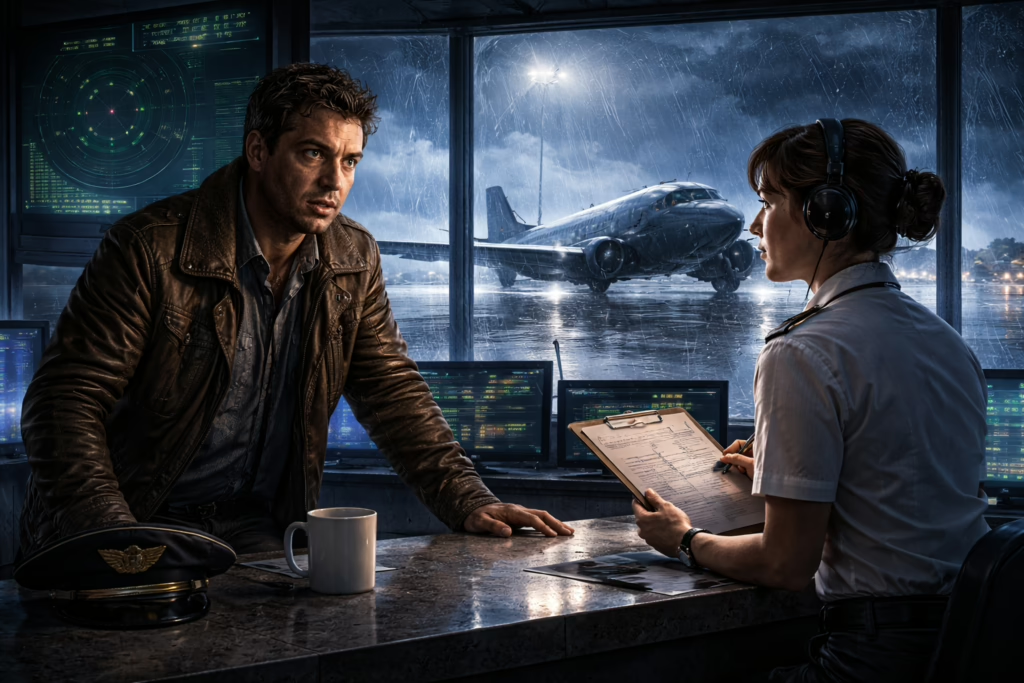
After landing, the narrator asks the woman in the control centre about the other aeroplane. She tells him that no other plane was flying that night, making the incident mysterious and unexplained.
The story highlights themes of faith, hope, courage, and the presence of mysterious help in times of crisis, leaving readers to interpret whether the black aeroplane was real or supernatural.
Analysis of “The Black Aeroplane”
“The Black Aeroplane” by Frederick Forsyth is a suspenseful and mysterious short story that explores the themes of danger, courage, faith, and the limits of human control. The story blends realism with mystery, keeping the reader engaged while leaving the ending open to interpretation.
Man vs Nature
One of the central conflicts in the story is man versus nature. The pilot is confident while flying in a clear sky, but the moment he enters the storm clouds, nature proves to be far more powerful than human skill and technology. The violent storm disables the aeroplane’s instruments and communication systems, showing how helpless humans can become in extreme natural conditions.
Human Weakness and Overconfidence
The narrator’s decision to fly into the storm reflects human overconfidence. Although he knows the danger and has limited fuel, he chooses comfort and impatience over safety. This choice leads him into a life-threatening situation, highlighting how poor judgment can have serious consequences.
Role of Faith and Hope
When the narrator loses all guidance—radio, compass, and fuel—hope appears in the form of the mysterious black aeroplane. His decision to follow it without questioning shows blind faith. This faith becomes his only means of survival, suggesting that trust and hope can guide people through the darkest moments.

Mystery and Supernatural Element
The disappearance of the black aeroplane and the control centre’s confirmation that no other plane was in the sky introduces a supernatural or psychological mystery. The story does not provide a definite explanation, encouraging readers to think whether the black aeroplane was an angelic guide, a hallucination, or a symbol of inner strength.
Symbolism
- Storm clouds symbolise danger, confusion, and fear.
- The black aeroplane symbolises hope, faith, or divine intervention.
- Runway lights symbolise safety, guidance, and survival.
Message of the Story
The story conveys that human beings are not always in control, and in moments of crisis, survival may depend on faith, calmness, and unexpected help. It also warns against overconfidence and stresses the importance of wise decision-making.
Relevance to Students
For Class X students, the story reflects real-life situations where fear, uncertainty, and risk are unavoidable. It teaches students to remain calm during difficulties and to trust that solutions may appear even when circumstances seem hopeless.
About the Author – Frederick Forsyth
Frederick Forsyth (1938–2025) was a renowned British novelist, journalist, and former Royal Air Force pilot. He is best known for his fast-paced thrillers that combine realistic detail, suspense, and political intrigue. His background as a pilot and a reporter greatly influenced the authenticity and technical accuracy of his writing.
Forsyth worked as a foreign correspondent in countries like France and Germany and reported on major international events. His firsthand experience of aviation is clearly reflected in “The Black Aeroplane”, where the technical details of flying, navigation, and storms are described convincingly.
He gained worldwide fame with novels such as The Day of the Jackal, The Odessa File, and The Dogs of War. His writing style is crisp, factual, and gripping, often blending realism with mystery.
In “The Black Aeroplane”, Frederick Forsyth combines his aviation knowledge with a touch of the supernatural to convey themes of faith, courage, and hope in moments of extreme danger, making the story engaging and thought-provoking for students.