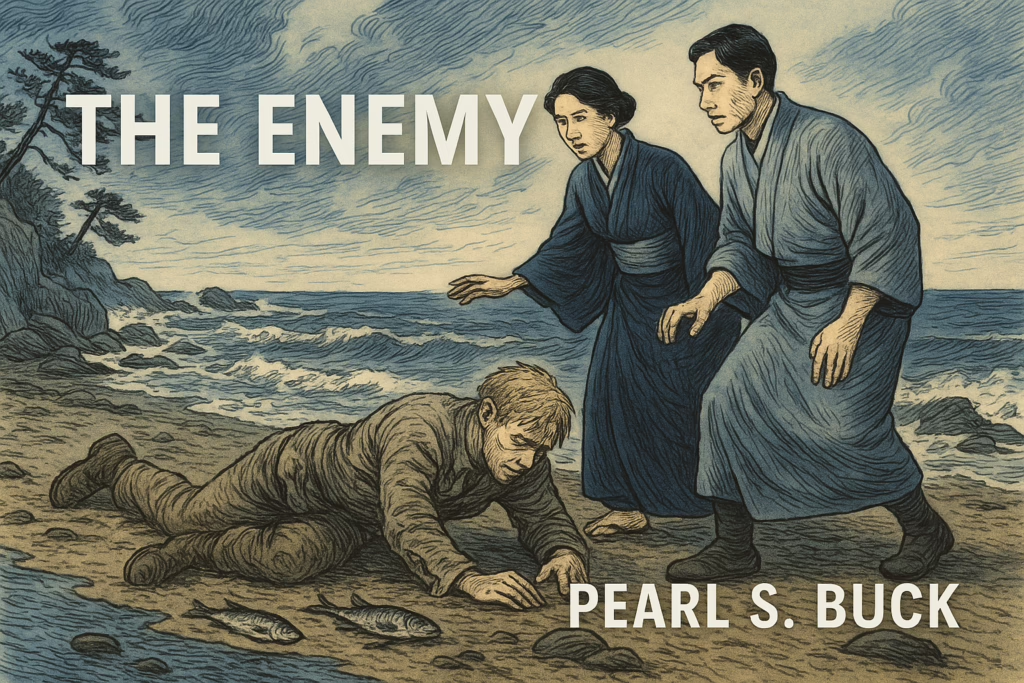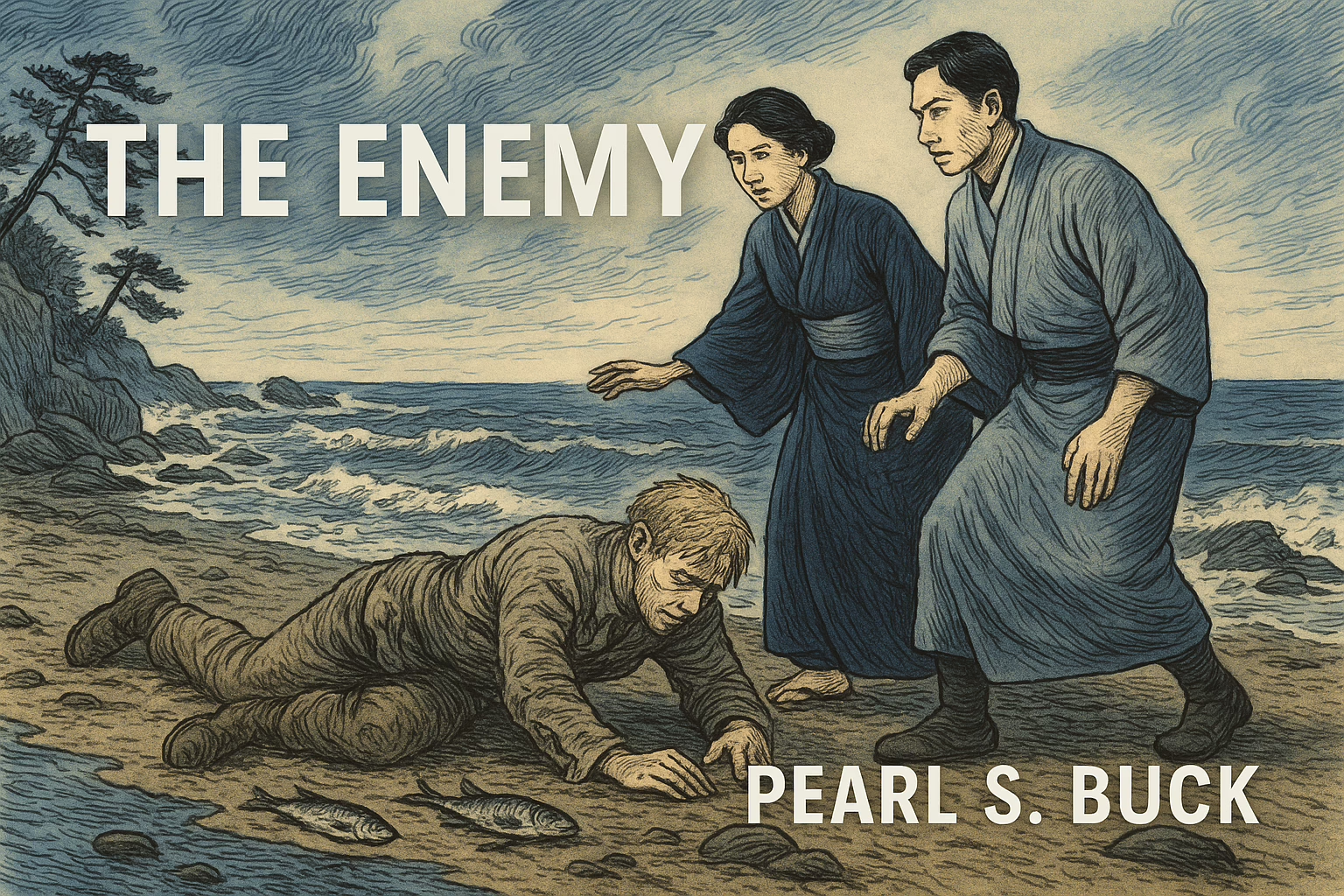
SUMMARY OF THE ENEMY — Pearl S. Buck
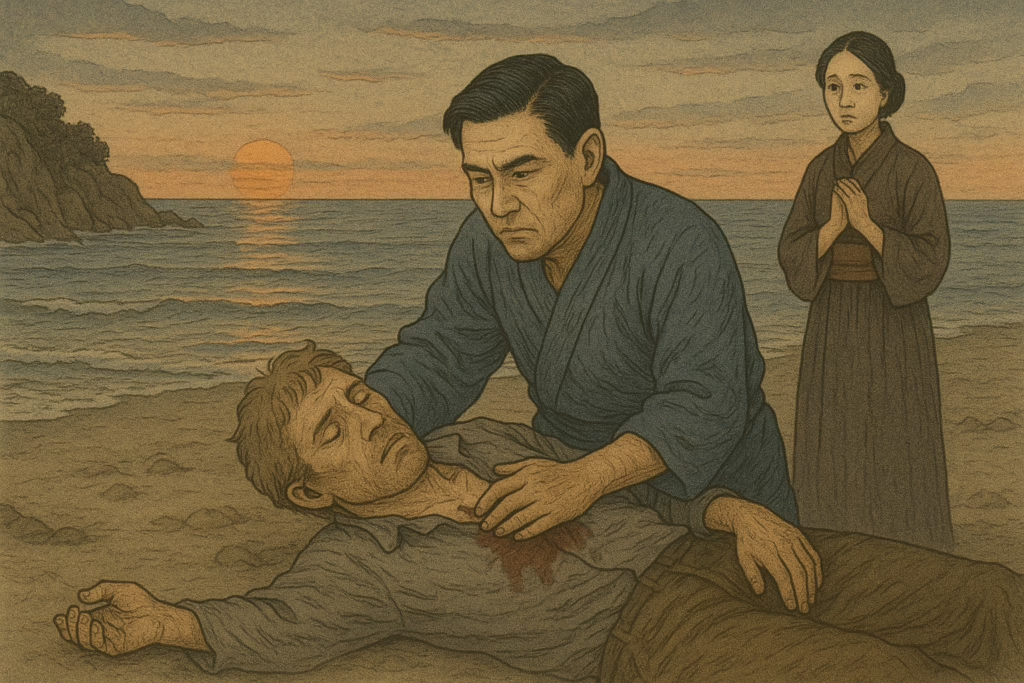
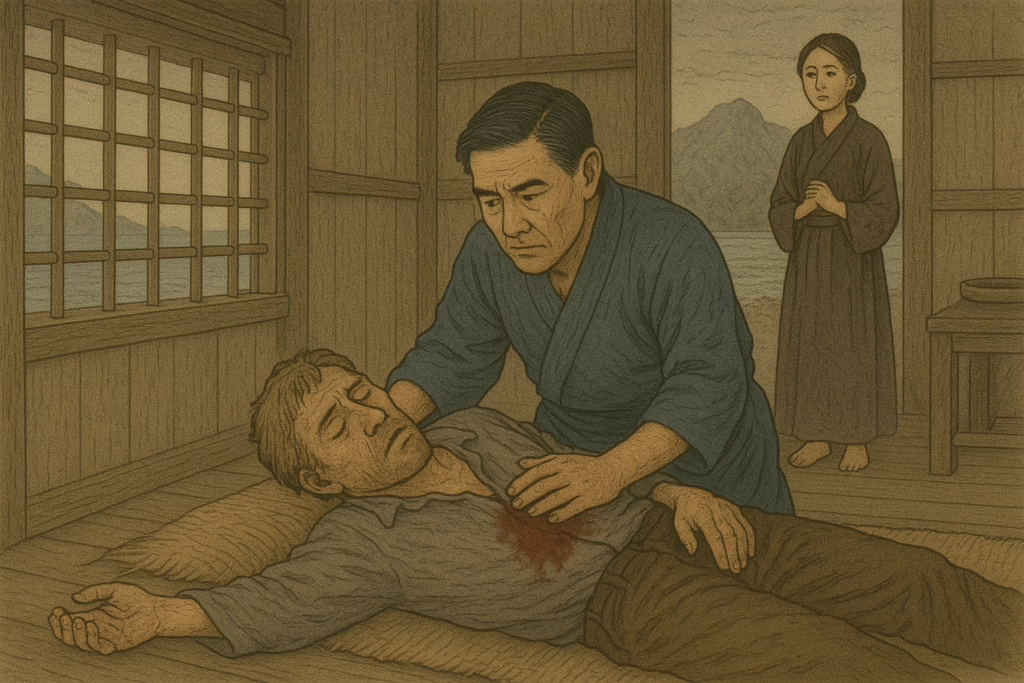
“The Enemy” is a story set during the Second World War, highlighting the conflict between national loyalty and human compassion. Dr. Sadao Hoki, a renowned Japanese surgeon trained in America, lives with his wife Hana near the sea. One evening, they find an injured American prisoner of war washed ashore near their house. As loyal Japanese citizens, they know that sheltering an enemy is a serious crime, yet as human beings — and especially as a doctor — Sadao feels compelled to save a dying man.
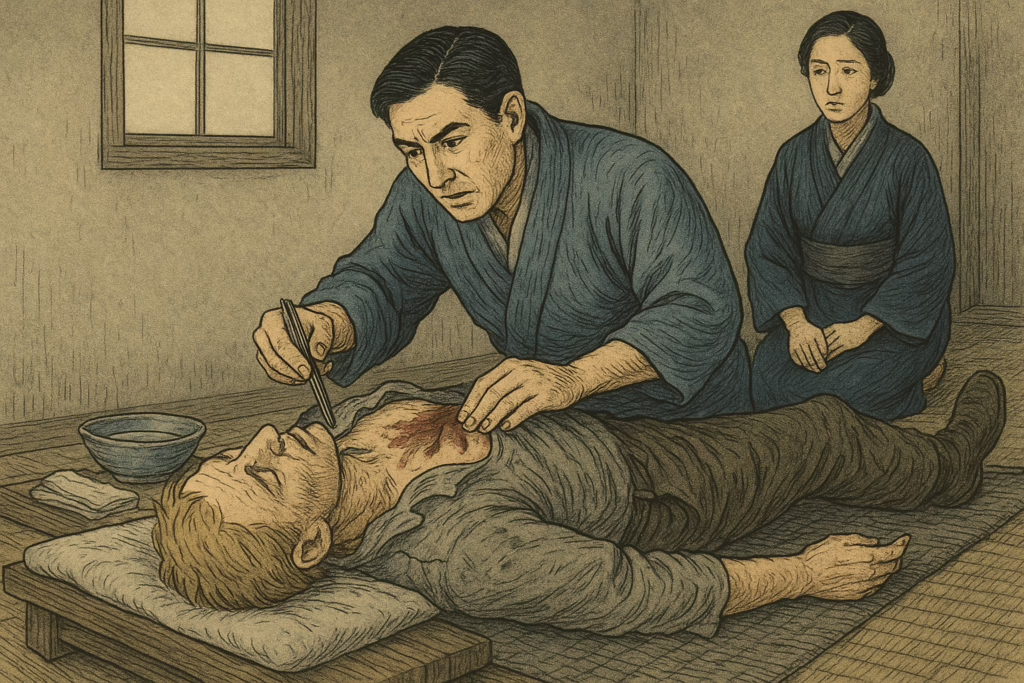
Despite their fear of being labeled traitors, Sadao brings the unconscious soldier home and operates on him, removing a bullet from his back. Hana helps him despite the servants’ disapproval. The servants eventually leave, believing that their master and mistress have betrayed Japan. The young American gradually recovers, but his presence becomes a burden and a danger to the couple.
Conflicted about what to do, Sadao informs the General, a powerful and self-centered military leader who depends on Sadao’s medical skills. Instead of ordering Sadao’s arrest, the General promises to send assassins to kill the prisoner quietly — but later forgets due to his own health issues. Realizing he can no longer endure the tension or risk the safety of his family, Sadao decides on another solution.
He secretly helps the soldier escape by providing a boat, food, quilts, and instructions to wait on a nearby island for a Korean fishing vessel. The next day, the General admits he forgot to send the assassins, assuring Sadao that he would protect him if the matter ever became public. Certain that he is now safe, Sadao checks the island and finds no signal, suggesting that the American has escaped successfully.
In the end, Sadao reflects on why, despite all his hatred and prejudice, he could not bring himself to kill the young enemy soldier. The story reveals that true humanity rises above war, nationalism, and racial prejudice.
ABOUT THE AUTHOR — PEARL S. BUCK
Pearl S. Buck (1892–1973) was an American author best known for her deep understanding of Asian culture, particularly China and Japan, where she spent much of her early life. She grew up in China as the daughter of American missionaries, which gave her firsthand experience of Eastern societies, traditions, and political conflicts. Her writing often reflects themes of cross-cultural interaction, humanity, compassion, and moral dilemmas.
Buck became world-famous for her novel The Good Earth, which won the Pulitzer Prize in 1932. In 1938, she became the first American woman to receive the Nobel Prize in Literature, honoured for her rich and sympathetic portrayals of Chinese peasant life and her contributions to understanding between the East and the West.
In The Enemy, Buck uses her international perspective to explore universal human values that rise above war, race, and nationalism. Her writing style is simple, powerful, and deeply humane.
READ AND FIND OUT — ANSWERS
1. Who was Dr Sadao?
Dr. Sadao was a highly skilled and famous Japanese surgeon and scientist who had been trained in America and was engaged in perfecting a medical discovery to render wounds clean.
2. Where was his house?
His house was built on a spot along the Japanese coast, set upon rocks above a narrow pine-lined beach where he had often played as a child.
3. Will Dr Sadao be arrested on the charge of harbouring an enemy?
No, Dr. Sadao is not arrested because the General, who needs him for a future medical operation, secretly decides not to report or punish him, even though Sadao confesses to helping an enemy soldier.
4. Will Hana help the wounded man and wash him herself?
Yes, Hana washes the wounded American soldier herself after Yumi refuses to do it, even though she is frightened and reluctant.
5. What will Dr Sadao and his wife do with the man?
Dr. Sadao and Hana decide to shelter the man temporarily, heal him, and then hand him over to the police because they fear the consequences for their family and social position. However, they postpone the decision as Sadao continues treating him.
6. What will Dr Sadao do to get rid of the man?
Dr. Sadao eventually helps the soldier escape by placing a boat on the shore with food, water, quilts, and a flashlight so the man can row to a nearby island and wait safely for a Korean fishing boat.
ADDITIONAL QUESTIONS THAT APPEAR WITHIN THE STORY
7. Will the servants report Sadao for helping the American prisoner?
The servants strongly disapprove and eventually leave the household, believing Sadao is betraying Japan, but they do not report him to the authorities.
8. What are the red scars on the prisoner’s neck?
The deep red scars on the prisoner’s neck suggest he may have been tortured or ill-treated during captivity, as Hana fears after seeing them.
9. Why is the prisoner reluctant to leave the house?
The soldier is afraid both of the danger outside and of the possibility of being killed if he leaves; the house feels like the only safe place he has known since being wounded.
MAIN TEXT QUESTIONS (READING WITH INSIGHT)
1. Hard choices between personal roles and national loyalty — Explain with reference to the story.
Dr. Sadao faces the moral dilemma of choosing between his duty as a doctor and his responsibility as a Japanese citizen during wartime. His medical ethics compel him to save a wounded human being, even though the man is an American enemy soldier. At the same time, his loyalty to his nation makes him fear being seen as a traitor. This conflict forces him to choose humanity over narrow nationalism.
2. Why was Hana sympathetic to the American soldier despite servant defiance?
Hana becomes sympathetic because the soldier is helpless, young, frightened, and suffering. Even though she dislikes him as an enemy, her humanity overcomes her fear and prejudice. Also, when Yumi refuses to wash him, Hana feels morally obligated to do it herself as an act of basic compassion.
3. Why was the soldier reluctant to leave the doctor’s home?
The soldier is fearful because leaving the house means risking death either at the hands of the Japanese military or from the harsh environment. In Sadao’s care, he feels protected and hopes he may survive. His trauma and weakness also contribute to his hesitation.
4. What explains the General’s attitude? Was it human consideration or something else?
The General’s attitude is primarily one of self-absorption. He is less concerned about national duty or human sympathy and more worried about losing Sadao, his best surgeon, who might be needed to save his own life. Because of this selfish concern, he chooses not to punish Sadao and even forgets to send the assassins.
5. What makes a human being rise above narrow prejudices?
Human beings rise above prejudice when compassion, professional duty, or moral values outweigh hatred and propaganda. For Sadao, the suffering and helplessness of the wounded enemy bring out his deeper sense of humanity, overriding wartime hostility.
6. Was the doctor’s final solution the best possible one?
Yes, it was the best practical and ethical solution. By secretly helping the prisoner escape, Sadao avoids betraying his country, protects his family’s safety, and still preserves a human life — something he is morally bound to do as a doctor.
7. Does the story remind you of “Birth” by A. J. Cronin? What similarities exist?
Yes, both stories highlight the ethical dedication of doctors and their duty to save life regardless of obstacles. In both, the doctor works tirelessly and selflessly, overcoming personal risk and emotional strain for the sake of a patient’s survival.
8. Any film or novel with a similar theme?
Yes, many war-time films like “Hacksaw Ridge” or novels like “The Enemy” (various adaptations) portray the idea of helping people across enemy lines. They similarly explore how human compassion survives even during war.