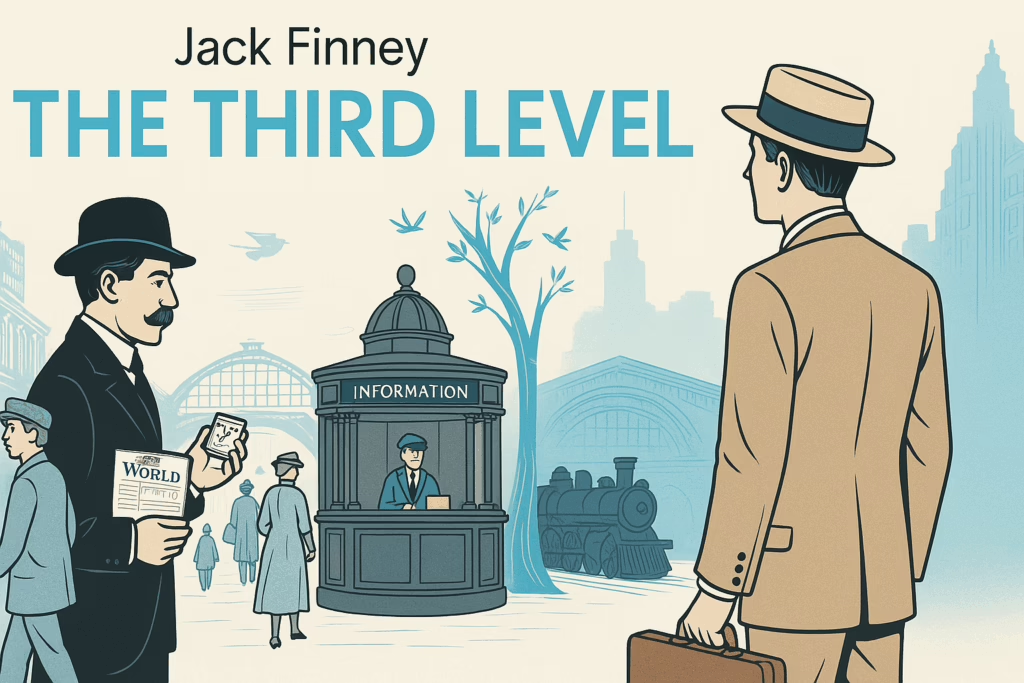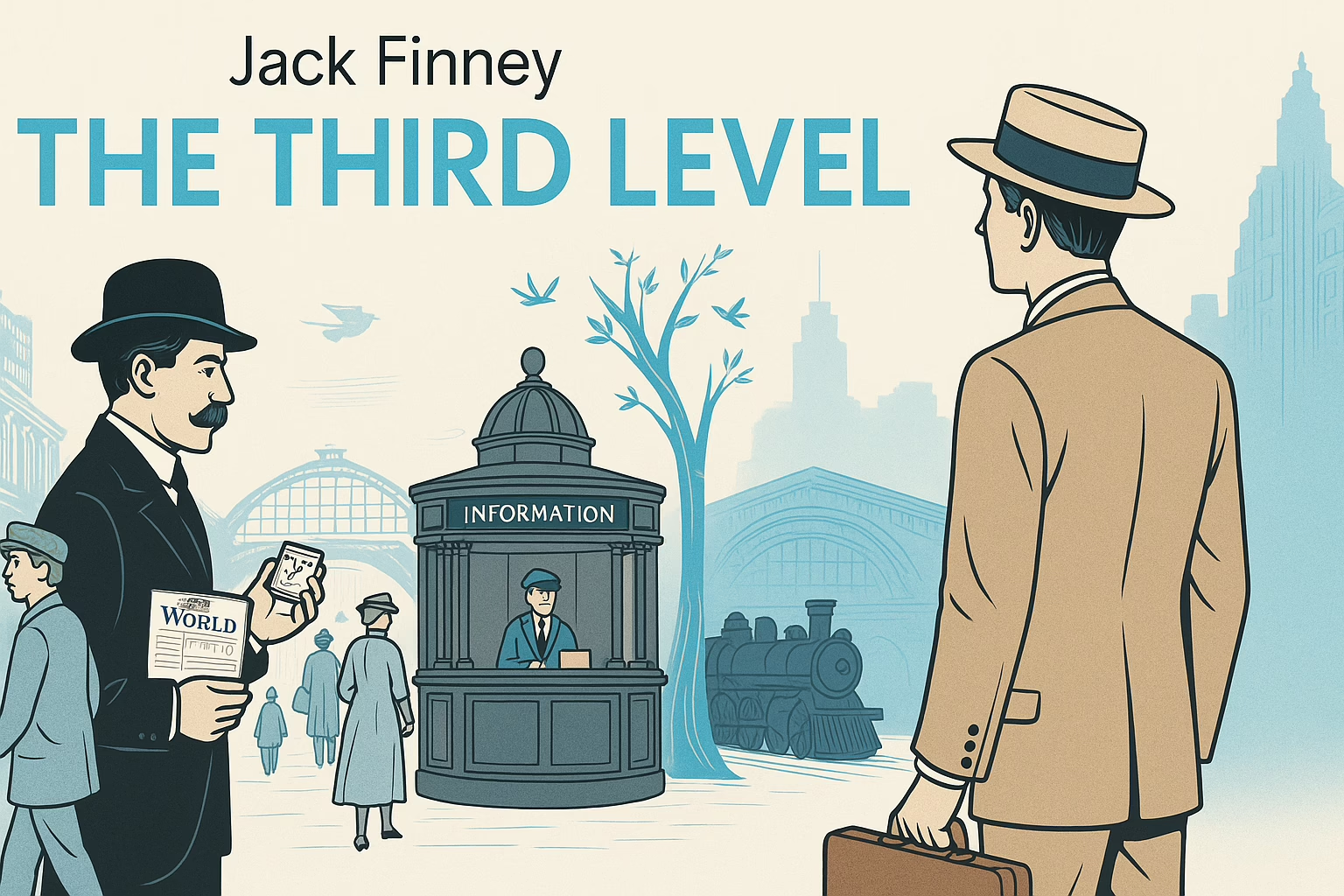
Understanding literature requires more than simply reading a story—it demands reflection, inquiry, and interpretation. Jack Finney’s The Third Level, a unique blend of fantasy and psychological insight, offers students rich opportunities to explore themes of escapism, anxiety, and the blurred boundaries between reality and imagination. This article compiles a comprehensive set of thought-provoking questions and answers designed for Class XII CBSE learners, helping them examine the text from multiple angles. Through short answers, long answers, HOTS, value-based, and extract-based questions, students can strengthen their conceptual understanding, sharpen analytical skills, and engage more deeply with the story’s timeless message about the human longing for peace in a rapidly changing world.
ADDITIONAL QUESTIONS & ANSWERS
Short Answer Questions (2 Marks)
1. Why did Charley describe himself as “an ordinary guy”?
Charley calls himself “an ordinary guy” because there was nothing unusual or imaginative about him—he was a 31-year-old man in a tan gabardine suit and straw hat, looking just like the other commuters around him. This emphasizes that his experience of discovering the third level cannot be dismissed as the fantasy of an eccentric person.
2. What made Charley certain that he had travelled back to 1894?
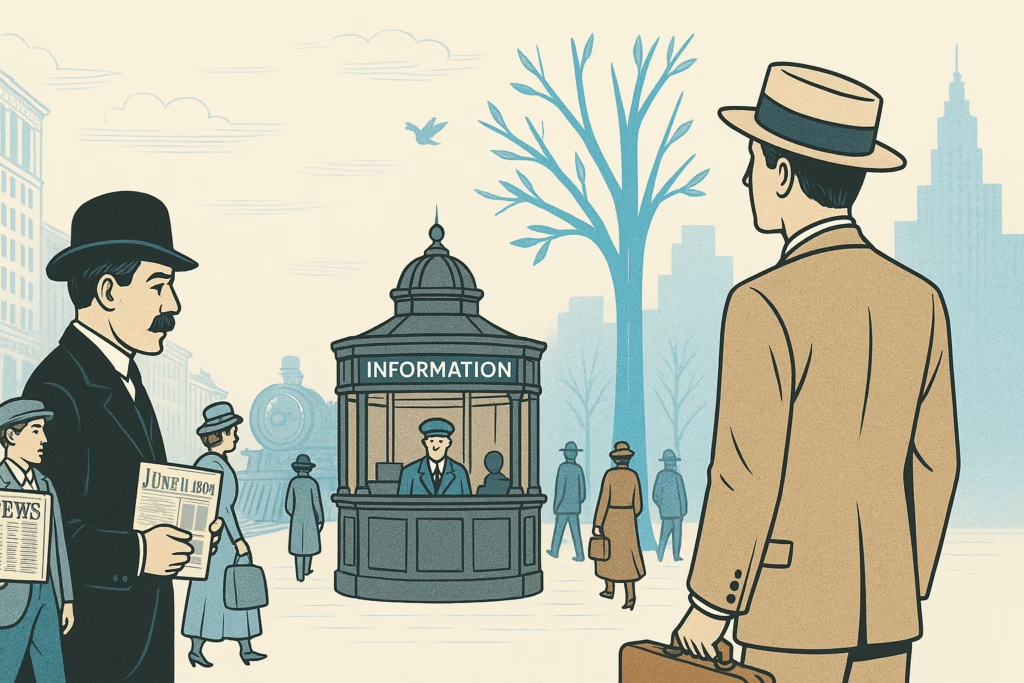
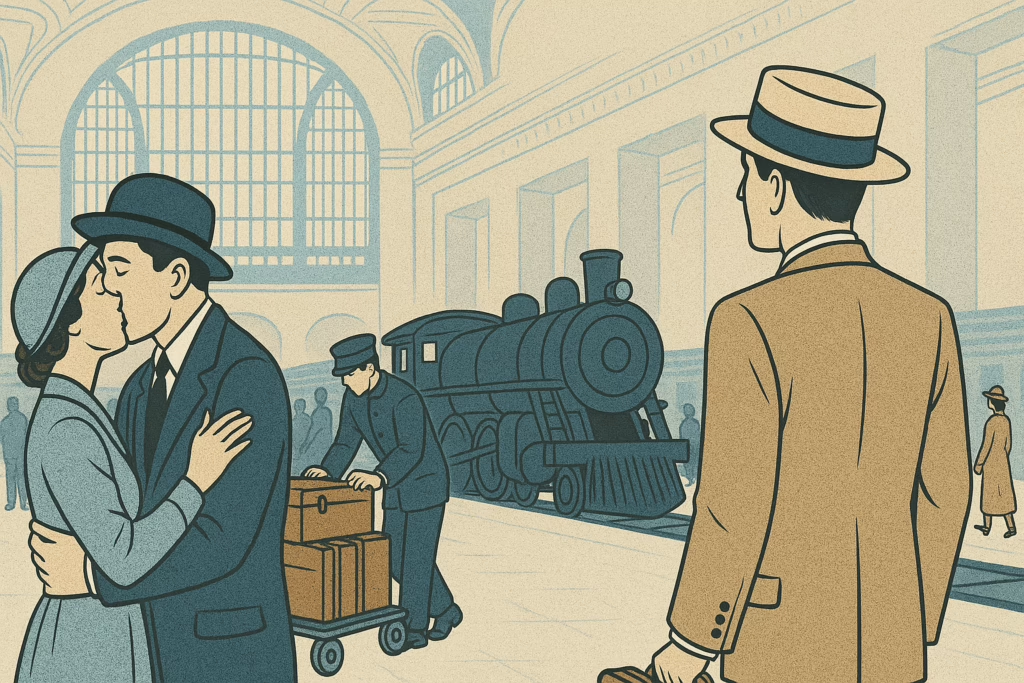
Several clues convinced him: the dim gaslights, old-style wooden information booth, brass spittoons, people’s 1890s clothing, a Currier & Ives locomotive, and a newspaper of The World dated June 11, 1894 mentioning President Cleveland. These unmistakably belonged to the past.
3. Why did the clerk at the ticket counter suspect Charley?
The clerk thought Charley was trying to cheat him (“skin me”) because Charley paid with modern currency, which appeared different from the oversized bills used in 1894.
4. How did Louisa react when Charley told her about the third level?
Louisa became worried and pleaded with him to stop searching for it, fearing he was becoming obsessed. Later, after Sam’s letter appeared, even she joined Charley in searching every weekend.
5. Why did Charley invest in old-style currency, and how much did he buy?
Charley withdrew $300 (almost all his savings) and bought less than $200 worth of old currency because he hoped to return to 1894 and buy two tickets to Galesburg for himself and Louisa. The psychiatrist felt this behaviour proved Charley’s escapist tendencies.
6. What is a first-day cover and why was it important in the story?
A first-day cover is an envelope stamped and mailed on the first day a new stamp is issued, kept unopened for collection. Charley discovers an unexpected first-day cover containing Sam’s letter from 1894, proving the third level’s existence.
7. What business did Sam start in 1894 and why?
Sam bought $800 worth of old currency to set himself up in a “hay, feed and grain business,” which he had always wanted to do—something impossible in his modern profession as a psychiatrist.
8. Why does Charley compare Grand Central Station to a growing tree?
He feels the station keeps expanding into new corridors and tunnels over time, just like a tree grows new roots. He imagines one such unknown tunnel might have led him accidentally into the past.
Long Answer Questions (5–6 Marks)
9. Discuss the theme of escapism in The Third Level.
The story presents escapism as a natural human reaction to the pressures of modern life. Charley is overwhelmed by the insecurity, fear, war, and stress of contemporary society. His psychiatrist suggests his longing for escape manifests as the hallucination—or fantasy—of a “third level” at Grand Central. The past, especially 1894 Galesburg, represents peace, long summer evenings, community gatherings, and emotional safety. Sam’s disappearance into the past reinforces this desire for refuge. The story portrays escapism not as weakness but as a deeply human impulse shaped by anxiety and nostalgia.
10. How does Jack Finney blend fantasy and reality in the story?
The narrative begins in a realistic modern setting—Grand Central Station, Charley’s job, his marriage, stamp collecting. Gradually, fantasy seeps in as Charley wanders into a mysterious third level. The vivid descriptions of 1894, old locomotives, period clothing, and newspapers make the fantasy appear real. The discovery of Sam’s letter in a first-day cover blurs the lines further. The story leaves readers uncertain whether the third level is imagination, time travel, or psychological escape. This seamless merging makes the narrative compelling and thought-provoking.
11. Examine the role of Sam’s letter in the plot.
Sam’s letter serves as the story’s turning point. Until the letter appears, the reader doubts whether Charley’s experience was real or imagined. The letter dated July 18, 1894—found in Charley’s own stamp collection—functions as concrete proof that the third level exists. It reintroduces the possibility of time travel, contradicting the psychiatrist’s initial diagnosis. It also explains Sam’s disappearance and validates Charley’s dreams, encouraging him and Louisa to resume their search. The letter bridges two timelines and redefines the story’s reality.

HOTS (Higher Order Thinking Skills) Questions
12. Do you think Charley’s discovery of the third level reflects a deeper psychological truth? Explain.
Yes. Even if the third level is imaginary, it symbolizes Charley’s deep desire to escape the anxieties of modern life. His mind creates a comforting world of 1894 as psychological relief. The story suggests that illusions can sometimes reveal emotional truths more powerfully than reality.
13. Is Sam’s decision to stay in 1894 justified? Evaluate.
Sam finds meaning, peace, and pleasure in a simpler life—something he could not achieve in the stress-filled modern world as a psychiatrist. His choice reflects the human longing for authenticity and emotional comfort. If the third level exists, Sam’s decision is rational; if not, it represents his own escape from psychological strain.
14. What does the story suggest about modern society’s effect on individuals?
The story implies that modern society overwhelms individuals with pressure, speed, competition, and constant worry. The very need for escapism—whether through hobbies, fantasies, or nostalgia—signals that modern life lacks emotional fulfillment.
Value-Based Questions
15. What values do Charley’s actions reveal about human priorities?
Charley’s yearning for Galesburg reflects the values of peace, family, togetherness, and emotional security—qualities often overshadowed in the modern pursuit of success. His willingness to spend all his savings shows he values happiness over material comfort.
16. What lesson can students learn from Charley and Louisa’s search for the third level?
The search symbolizes hope, persistence, and the belief in possibilities beyond the visible world. It teaches students to balance reality with imagination, and to seek peace without losing touch with the present.

Extract-Based Questions
17. “That ain’t money, mister…” – Why does the clerk make this remark?
He rejects Charley’s payment because modern bills look very different from the large-sized 1894 currency. The clerk suspects Charley of cheating and warns him that such tricks won’t work.
18. “Grand Central has been an exit, a way of escape.” – Explain the significance of this line.
Charley metaphorically links the station to people’s desire to escape stress. For him, the station becomes a literal exit—leading not just to trains but to another era, symbolizing the ultimate escape from modern worries.
Conclusion
The Third Level remains one of the most engaging and meaningful texts in the Class XII curriculum, not only for its imaginative storyline but also for its deeper commentary on human emotions and modern life. The questions and answers explored in this article aim to guide students toward a clearer understanding of the narrative’s themes, characters, and symbolic elements. By reflecting on concepts such as escapism, nostalgia, and the interplay of fantasy and reality, learners develop critical thinking skills that extend far beyond the classroom. Ultimately, this analytical journey reinforces that literature is a mirror to our inner world—inviting us to question, interpret, and connect the text with our own experiences.