Summary of The Tiger King
The Tiger King is a satirical story by Kalki that exposes the arrogance, foolishness, and cruelty of those in power. It narrates the life—and ironic death—of Maharaja Sir Jilani Jung Jung Bahadur of Pratibandapuram, famously known as the Tiger King.
At the time of his birth, astrologers predicted that the prince would grow up to be a mighty warrior but would eventually die because of a tiger. Shockingly, the baby prince speaks and challenges the prophecy, declaring that he will kill all tigers and defeat fate itself.
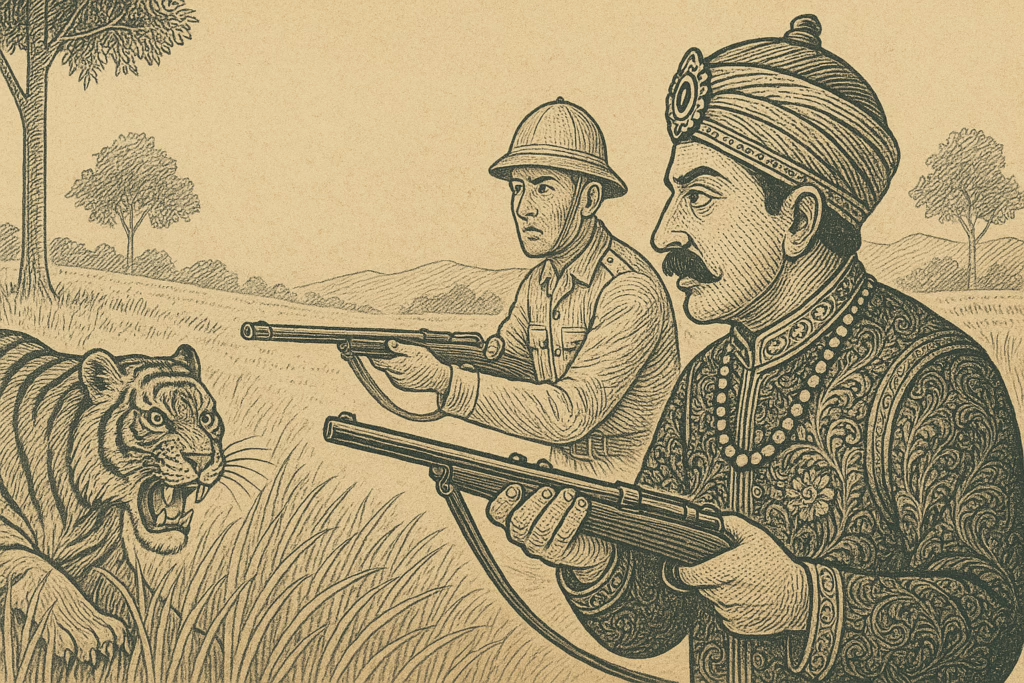
When he grows up and becomes the Maharaja, he becomes obsessed with proving the prophecy wrong. He begins hunting tigers relentlessly. He bans all tiger hunting for others in his state so that he alone can kill them. He kills seventy tigers in ten years, but when tigers become extinct in his forests, he marries a princess from a kingdom with a large tiger population. Every visit to his father-in-law’s state helps him kill more tigers, and soon he reaches ninety-nine.
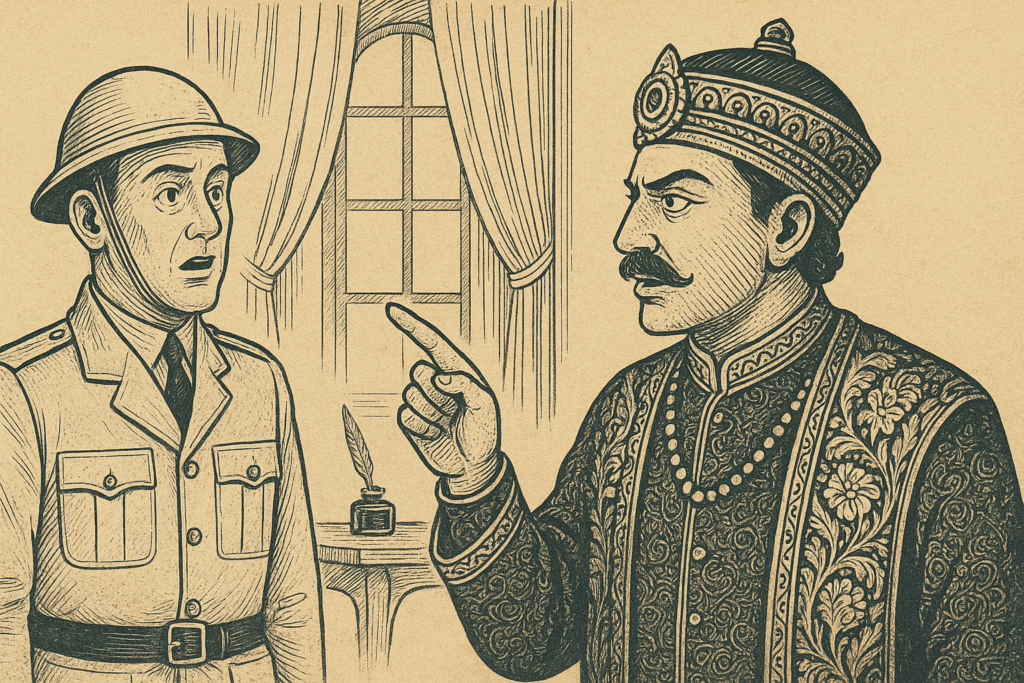
However, the hundredth tiger proves impossible to find. When the Maharaja becomes frustrated, the dewan secretly brings an old tiger from a public park and places it in the forest. The Maharaja shoots at it, but the bullet misses; the tiger only faints. To keep their jobs, the hunters kill it themselves and allow the king to believe he has fulfilled his vow.
Later, for his son’s birthday, the Maharaja buys a cheap wooden toy tiger. The poorly made toy has rough splinters, and one of them pierces his hand. The wound gets infected, becomes serious, and even after surgery the Maharaja dies. Thus, the “hundredth tiger”—the toy tiger—ironically causes his death. The astrologer’s prophecy is fulfilled in a completely unexpected way.
Through humour and dramatic irony, the story highlights human vanity, the misuse of power, and the tragic consequences of exploiting nature.
About the Author — Kalki
Kalki is the pen name of Ramaswamy Krishnamurthy (1899–1954), one of the most respected Tamil writers, journalists, and freedom fighters of modern India. He was a prominent literary figure known for his sharp wit, powerful storytelling, and strong sense of social responsibility. As an editor of the weekly magazine Kalki, he produced essays, stories, and commentaries that combined humour with criticism of political and social issues.
Kalki is widely admired for his historical novels, short stories, and satirical writings. His works often highlight human follies, hypocrisy, and the misuse of authority. The Tiger King is an example of his satirical style, where he uses humour and dramatic irony to expose the arrogance of rulers and the exploitation of nature.
Kalki’s contribution to Tamil literature is immense, and he remains a celebrated figure whose writings continue to entertain, educate, and inspire readers.
BEFORE YOU READ — Answers
1. What is the general attitude of human beings towards wild animals?
Human beings generally treat wild animals as creatures to be controlled, hunted, or exploited for their own pleasure or pride. Instead of respecting them as part of nature, many people consider them inferior and feel entitled to kill or dominate them for entertainment, status, or fear.
READ AND FIND OUT — Answers
1. Who is the Tiger King? Why does he get that name?
The Tiger King is Maharaja Sir Jilani Jung Jung Bahadur of Pratibandapuram. He gets that name because he grows up determined to kill tigers after astrologers predict that his death will come from a tiger. To defy this prophecy, he kills a large number of tigers and becomes known for this obsession.
2. What did the royal infant grow up to be?
The royal infant, Jilani Jung Jung Bahadur, grew up to be a strong and powerful Maharaja who was heavily influenced by English culture. He became obsessed with proving the astrologer wrong by killing one hundred tigers.
3. What will the Maharaja do to find the required number of tigers to kill?
To find the required number of tigers, the Maharaja marries a princess from a royal family whose state has a large tiger population. Every time he visits his father-in-law, he hunts several tigers, helping him reach a total of ninety-nine.
4. How will the Maharaja prepare himself for the hundredth tiger which was supposed to decide his fate?
The Maharaja becomes extremely cautious as he searches for the hundredth tiger. He refuses to handle any other work, intensifies his hunting efforts, punishes officers when they fail, and reacts angrily to delays. He even increases taxes in frustration and continues hunting relentlessly.
5. What will now happen to the astrologer? Do you think the prophecy was indisputably disproved?
The astrologer had predicted that the Maharaja’s death would come from a tiger. Although the Maharaja believes he has killed the hundredth tiger and disproved the prophecy, the prediction actually comes true. The wooden toy tiger injures his hand, the wound becomes infected, and he dies after surgery—ironically, still because of a “tiger.” Therefore, the prophecy is not disproved at all.
READING WITH INSIGHT — Answers
1. How does the author employ dramatic irony in the story?
The author uses dramatic irony by allowing readers to know what the Maharaja does not: that his attempts to escape death by killing a hundred tigers will actually bring about his death. Readers learn that the hundredth tiger he “kills” is not killed by him, and ultimately a wooden toy tiger causes his fatal wound. The contrast between the Maharaja’s confidence and the actual outcome creates humour and exposes his foolishness.
2. What is the author’s indirect comment on subjecting innocent animals to human willfulness?
The author indirectly criticises human cruelty toward animals by showing how tigers are killed in large numbers simply to satisfy the Maharaja’s ego. Tiger hunting becomes a symbol of human arrogance and the destructive attitude towards nature. The extinction of tigers in Pratibandapuram highlights the consequences of exploiting wildlife for selfish motives.
3. How would you describe the behaviour of the Maharaja’s minions? Are they sincere or driven by fear? Is there similarity with today’s politics?
The Maharaja’s minions obey him out of fear, not sincerity. They constantly flatter him, manipulate situations to please him, and even fake the killing of the hundredth tiger to protect their positions. Their obedience comes from fear of punishment rather than loyalty. This behaviour is similar to modern political environments where officials often agree with leaders out of fear of losing power, status, or security.
4. Can you relate instances of game hunting among the powerful today that illustrate human callousness?
Even today, wealthy and influential individuals participate in trophy hunting—killing lions, elephants, tigers, and rare species for pleasure. Despite conservation laws, illegal wildlife hunting continues in many countries, supported by money and political influence. These incidents reflect the same lack of compassion seen in the Maharaja’s actions.
5. “We need a new system for the age of ecology.” Discuss.
A new ecological system is needed that respects all forms of life and recognises the interdependence of humans, animals, and nature. The story shows how human arrogance can destroy wildlife and disturb ecological balance. Modern society must shift from exploitation to conservation, ensuring sustainable development, protection of endangered species, and responsible use of natural resources. Such a system should prioritise the well-being of the Earth and all its inhabitants.